
MIDORI Matcha & Coffee
How a creative studio put its own ideas to work, from a matcha bar on Pasteur to products, cultural events and a second café.
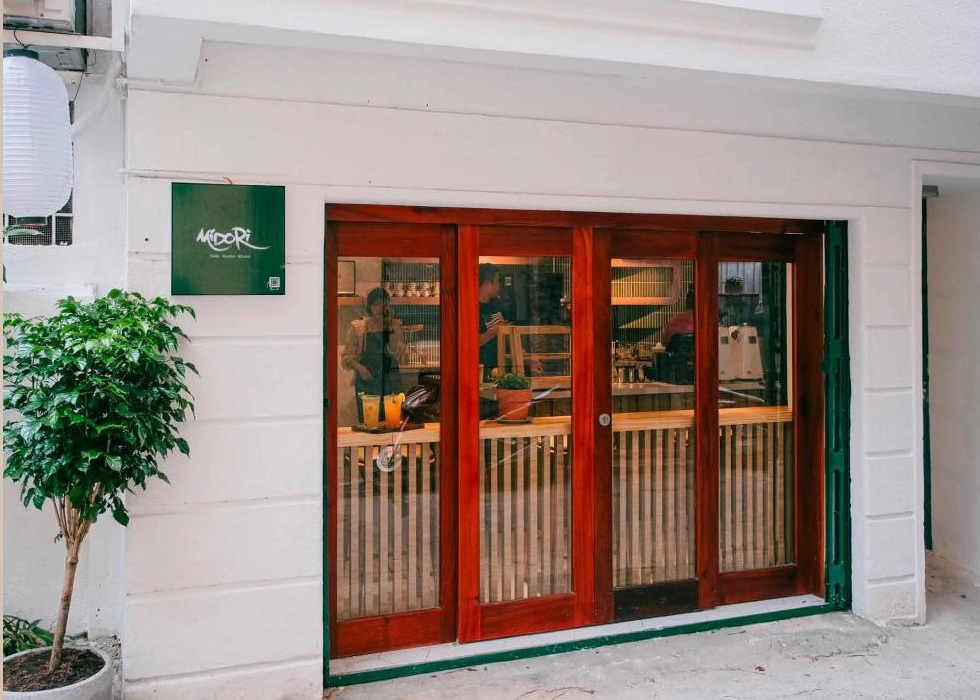
Saigon · Since September 2024
The studio took on the business
In September 2024, two creatives opened a matcha bar in a Saigon alley. They had to make the brand work from the first order.
Khương Cao and his wife put their own money into MIDORI. They had no experience running a café. Their brief came with three constraints: a tight budget, premium ingredients and a four-storey townhouse with roughly twelve square metres on each floor, in a city already full of matcha shops.
It was Khương’s largest project. The Japanese idea of Ma, the space between things, gave the founders a way to make choices under those constraints. They could build a pause into the room, the way a guest finished a drink and the objects that went home with them. They then had to run the business that made those experiences possible.
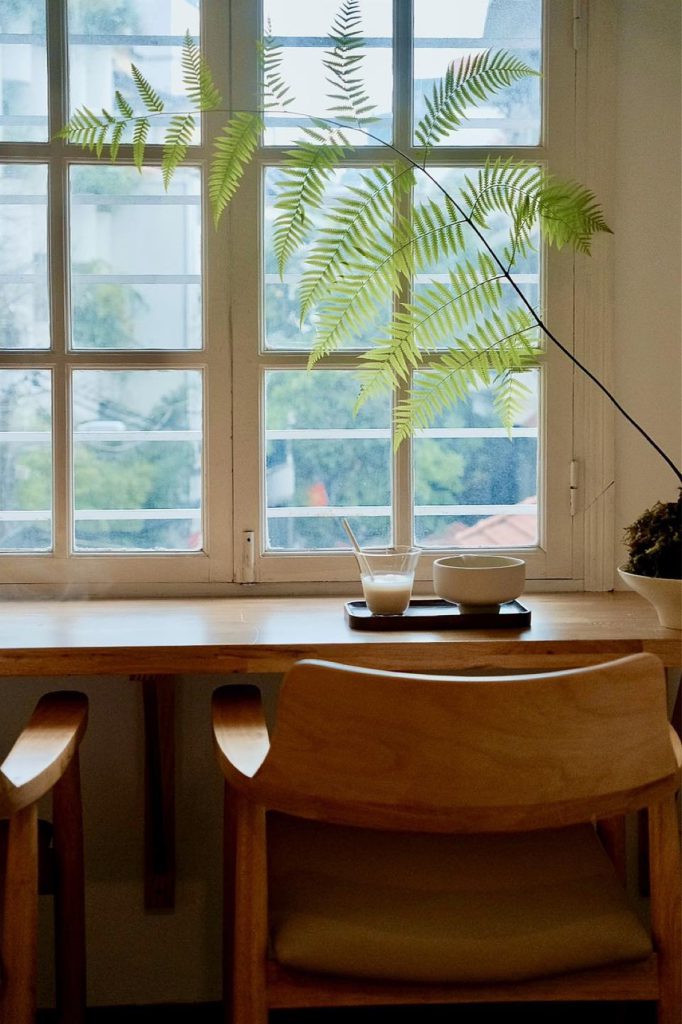
The studio’s brief
A design decision only counted when it worked in the café.
A menu had to help someone order, a bowl had to work in the hand, and a small room had to serve both a guest on their own and a table full of people.
September 2024 · Pasteur
Opening the first door
Pasteur gave the studio four small floors to work with. The original plan gave each a job: the bar, a room for conversation, a quieter Hako space for focused work, and the studio upstairs. Assigning different uses to small rooms let the founders decide what kind of attention each room could support.
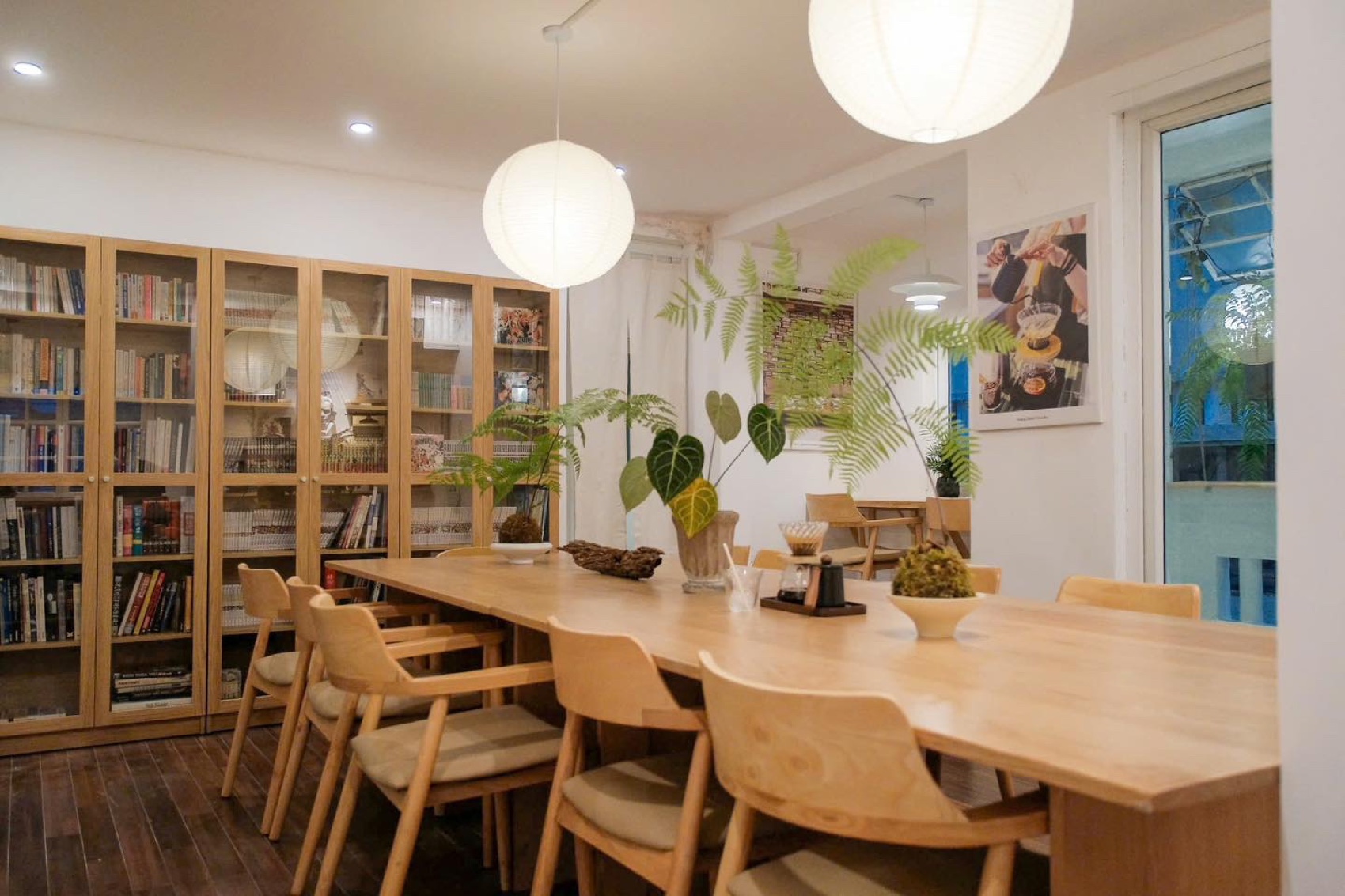
Pasteur, a matcha bar
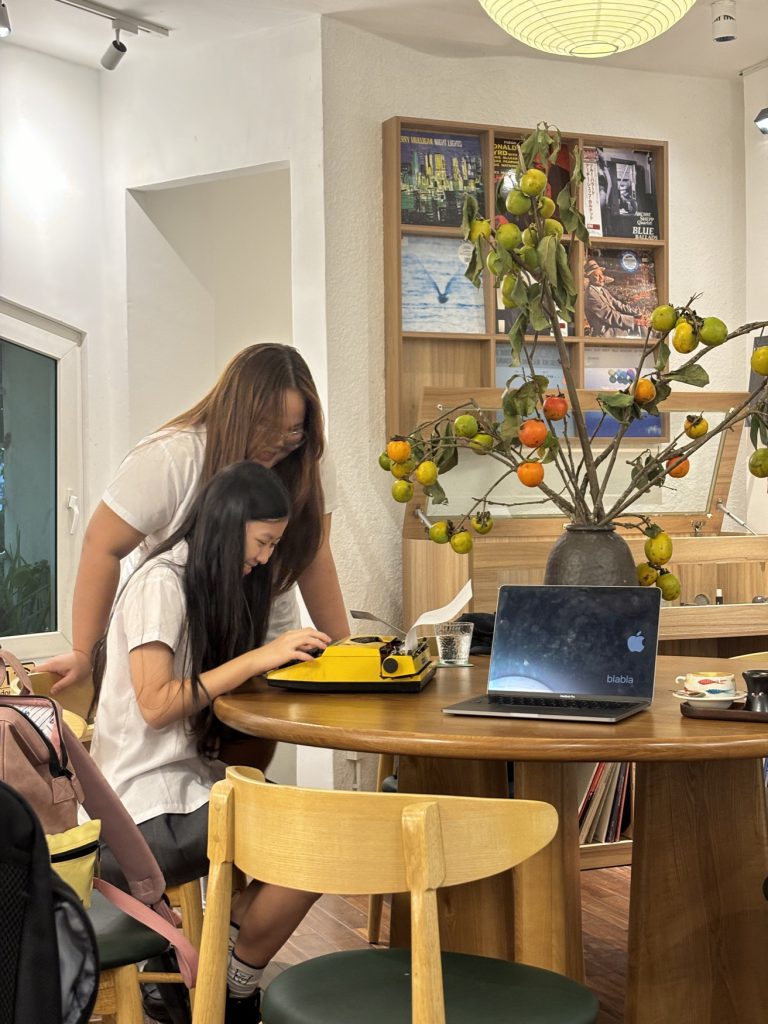
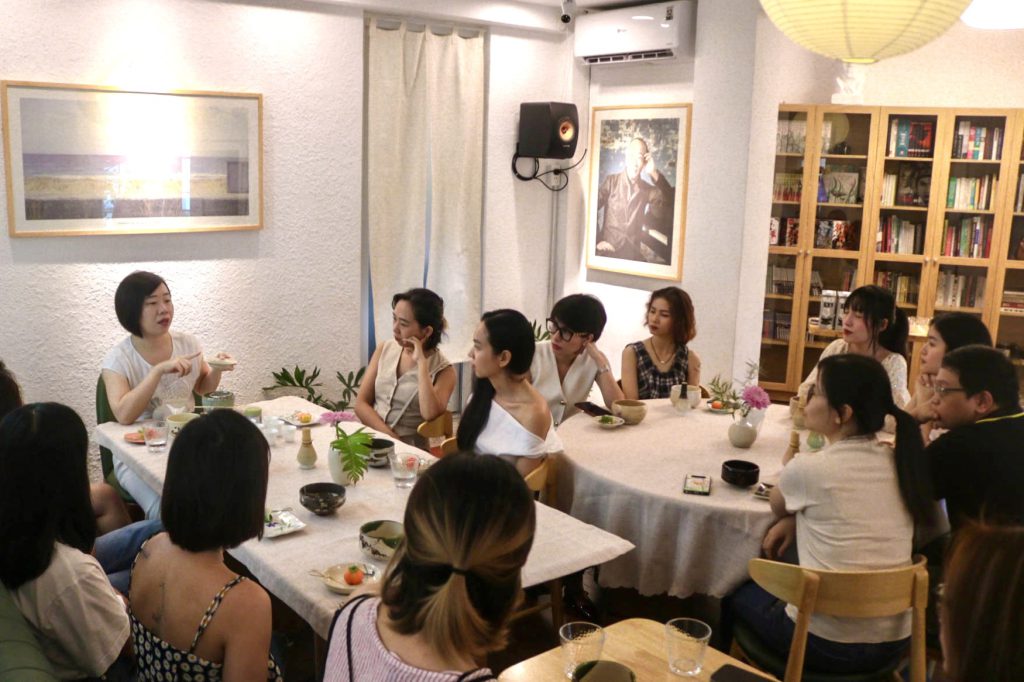
White walls, timber furniture and warm paper lamps left room for things the founders already used and loved: ceramics, records and books. The long table earned its place twice, as a table in daily service and as the place where people could learn to make matcha together.
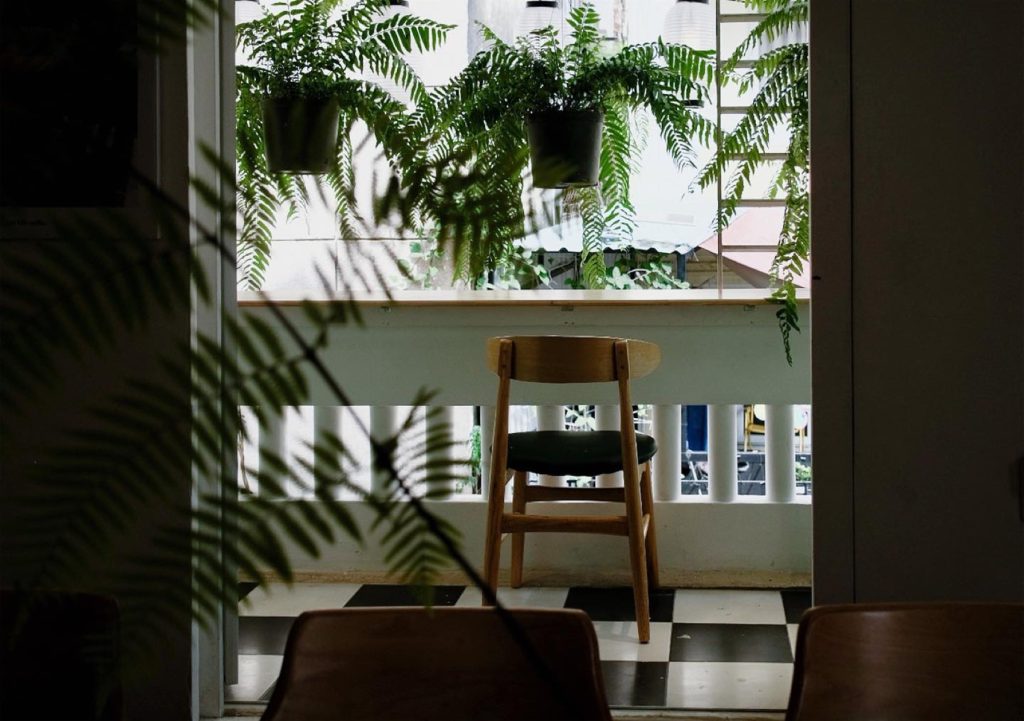
When the room fills up
At Pasteur, a table can hold a laptop and a drink, or make room for people to sit together over tea. Photographs from the café archive show the room in use, from a small table downstairs to the gatherings upstairs.



The brand guideline
A system for making decisions
The wordmark began as a digital brush drawing informed by shodō. Its visible strokes carry movement. The guideline pairs it with IBM Plex Sans for quieter information. The colours come from the world of the café: deep green for depth, matcha green, earth tones and pale blues for air and water.
Product photography applies the same principle. Neutral backgrounds and deliberate space let the colour and texture of the ingredients come forward. That gives the menu, packaging and photographs a common logic as the range grows.

Brand guideline · Colours drawn from ingredients and atmosphere.

Brand guideline · IBM Plex Sans and the hand-drawn wordmark.
Developing the menu
Designing what we serve
Tea in the guest’s hands
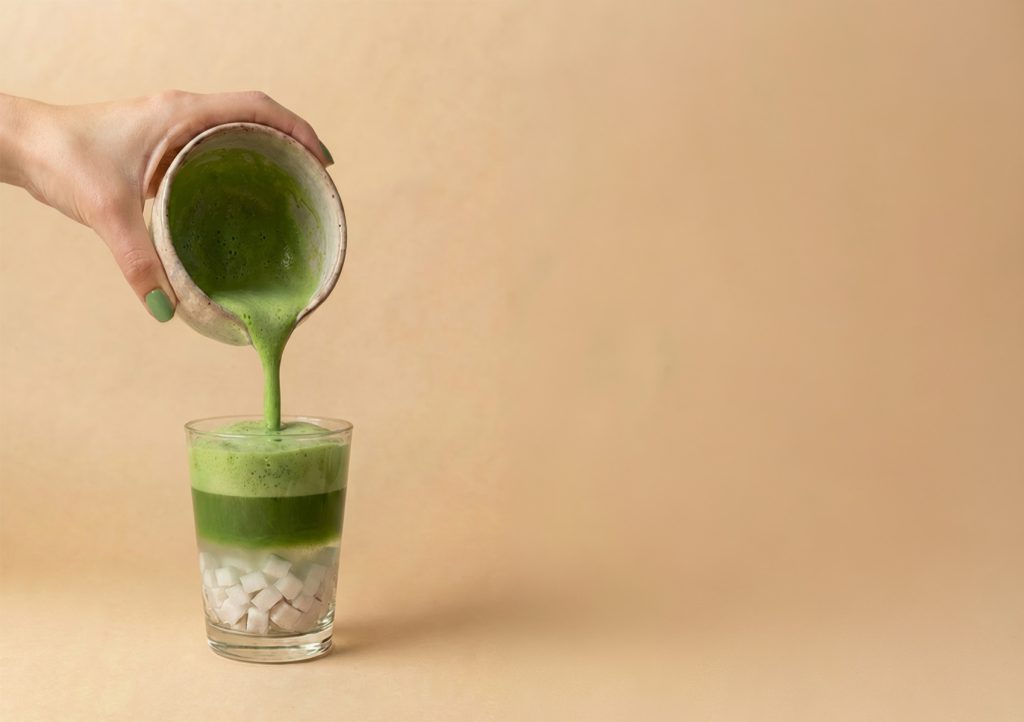
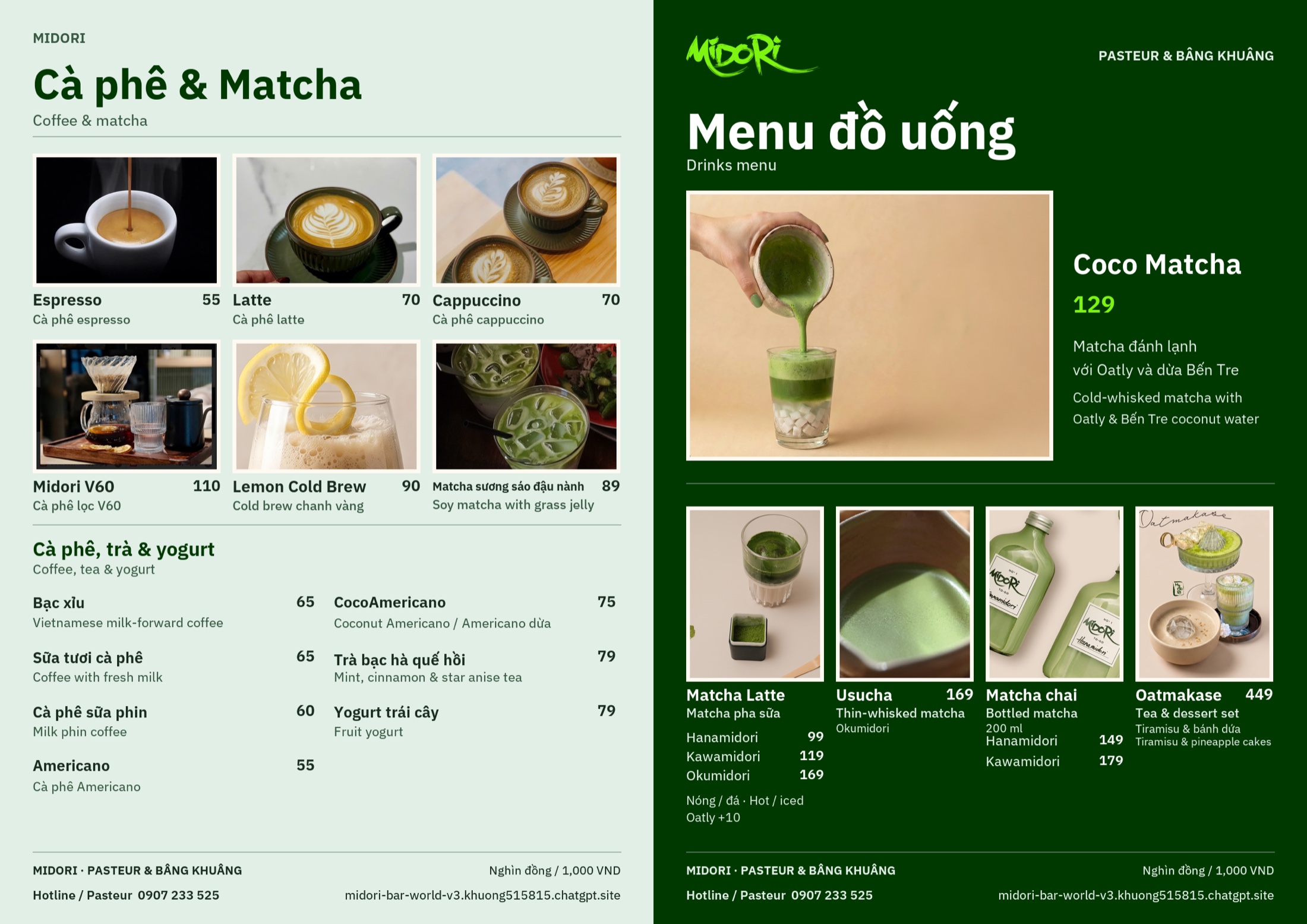
Usucha offers the tea on its own. Coco Matcha sets Japanese matcha beside Bến Tre coconut water and asks the guest to finish the pour. The decision changes the serve as well as the recipe: two vessels arrive at the table, and the layers form in front of the guest. As the range grew, the bilingual menu grouped drinks and used photographs to make the choices legible.


From hojicha to matcha
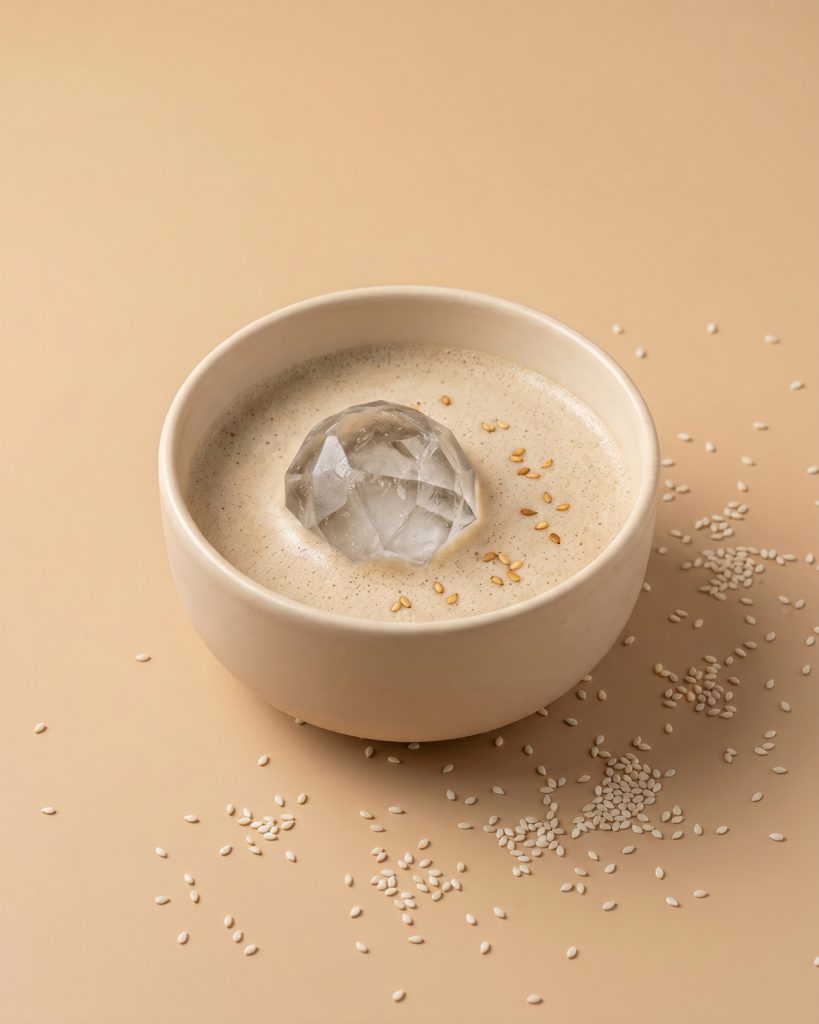
Hojime

Coco Hojicha
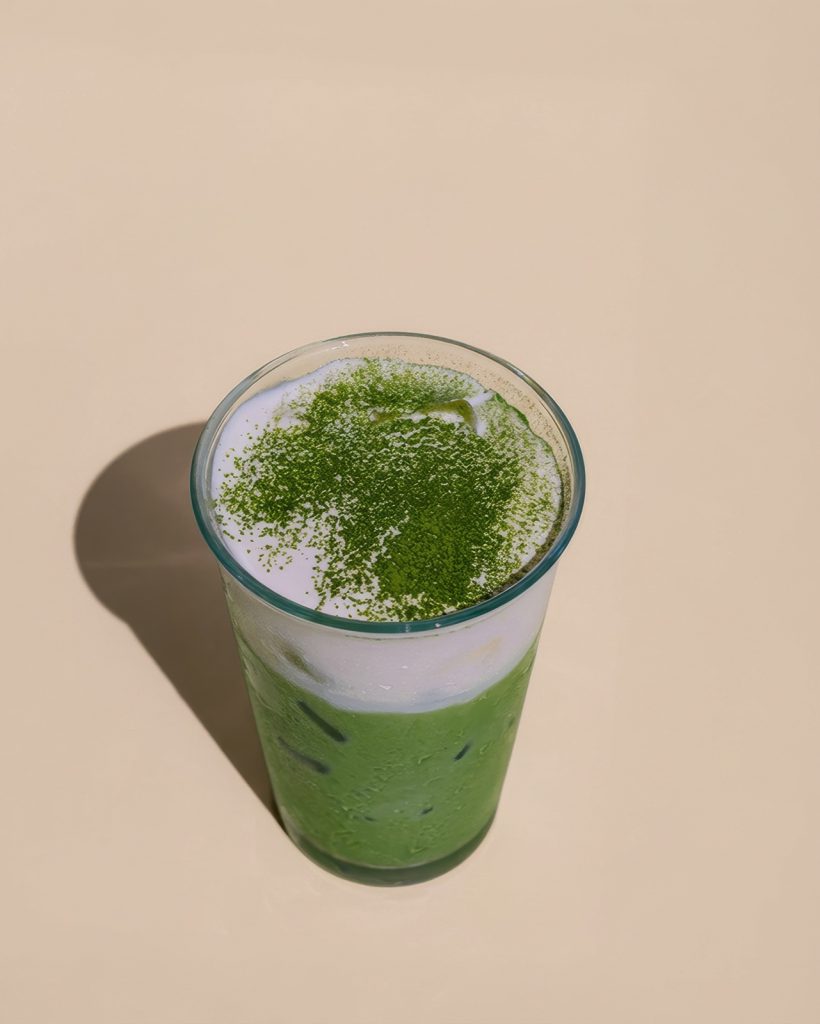
Salted Cream Matcha
Four ways to build a matcha drink
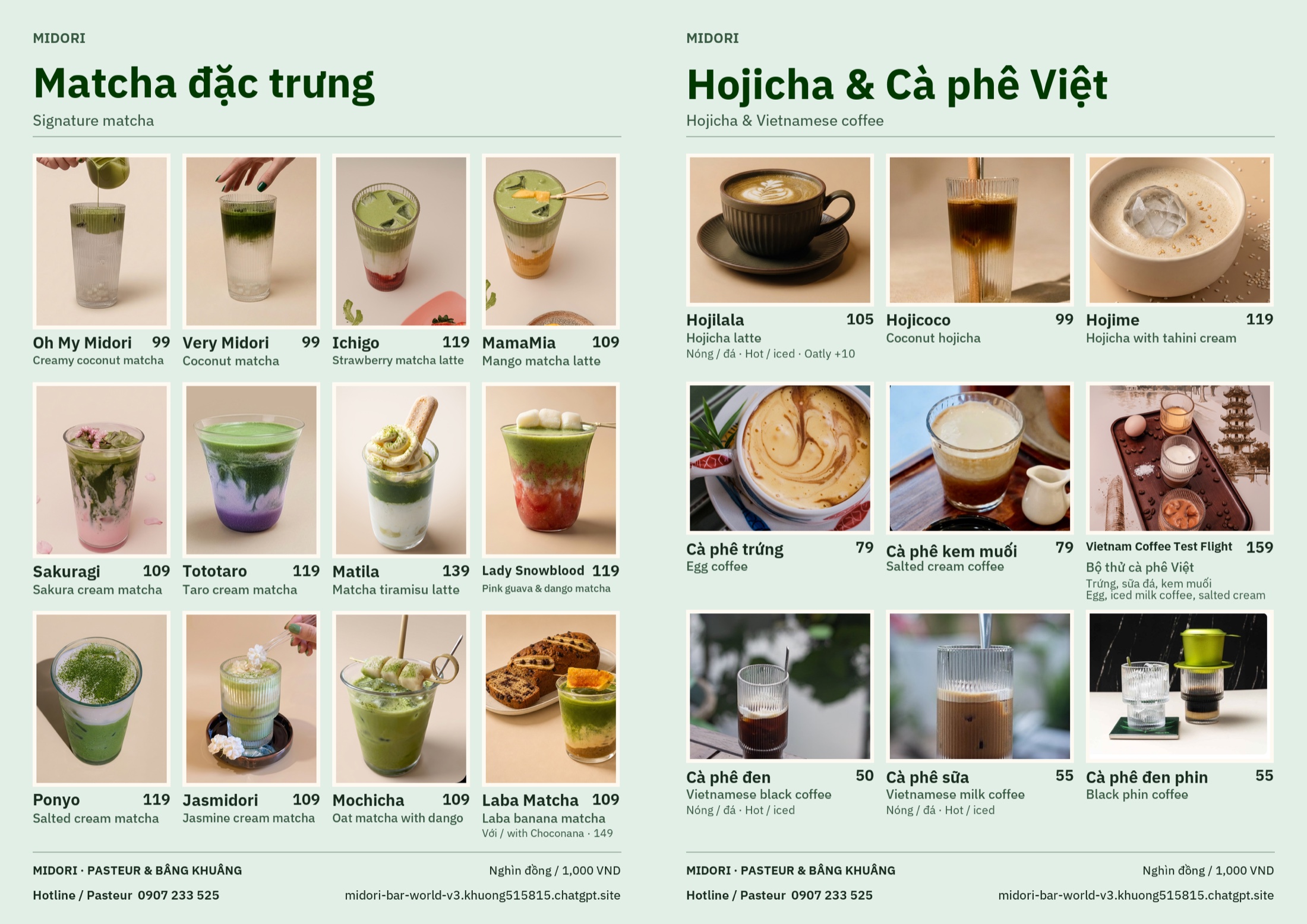
The August 2026 Pasteur menu puts matcha alongside sakura cream, taro, pink guava and tiramisu. The photographs make the differences visible before the first sip: petals beside Sakuragi, the violet layer of Tototaro, and the kushi dango served with Lady Snowblood.

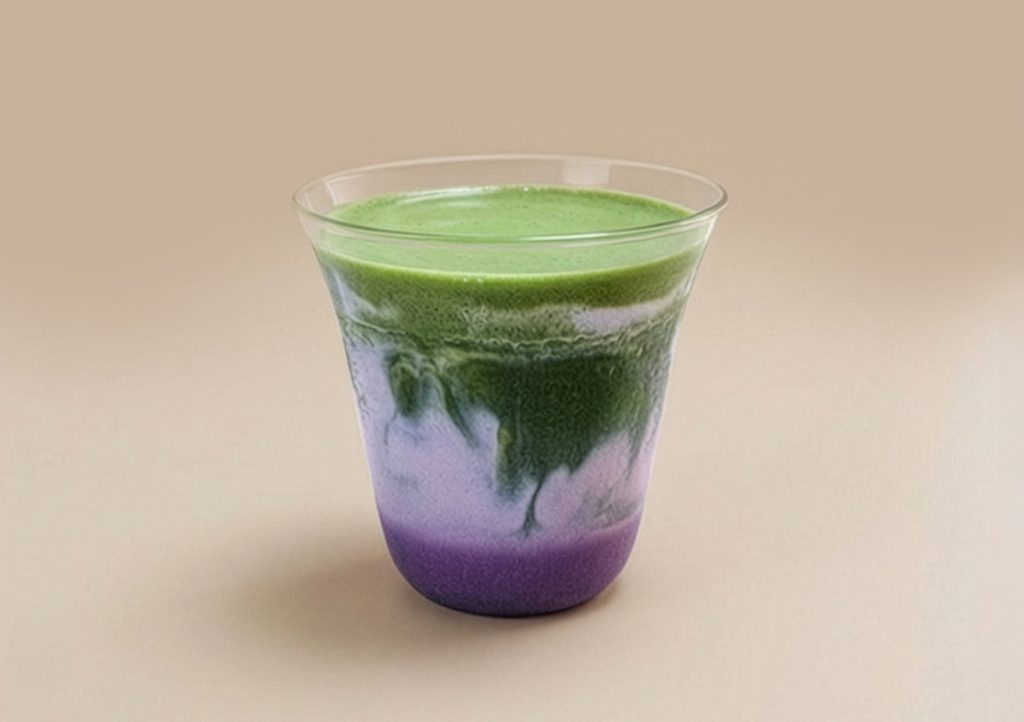


From photograph to printed menu
The Matila and Tototaro page shows how the studio uses the product photograph to carry colour and texture, with the name and a short description alongside it.
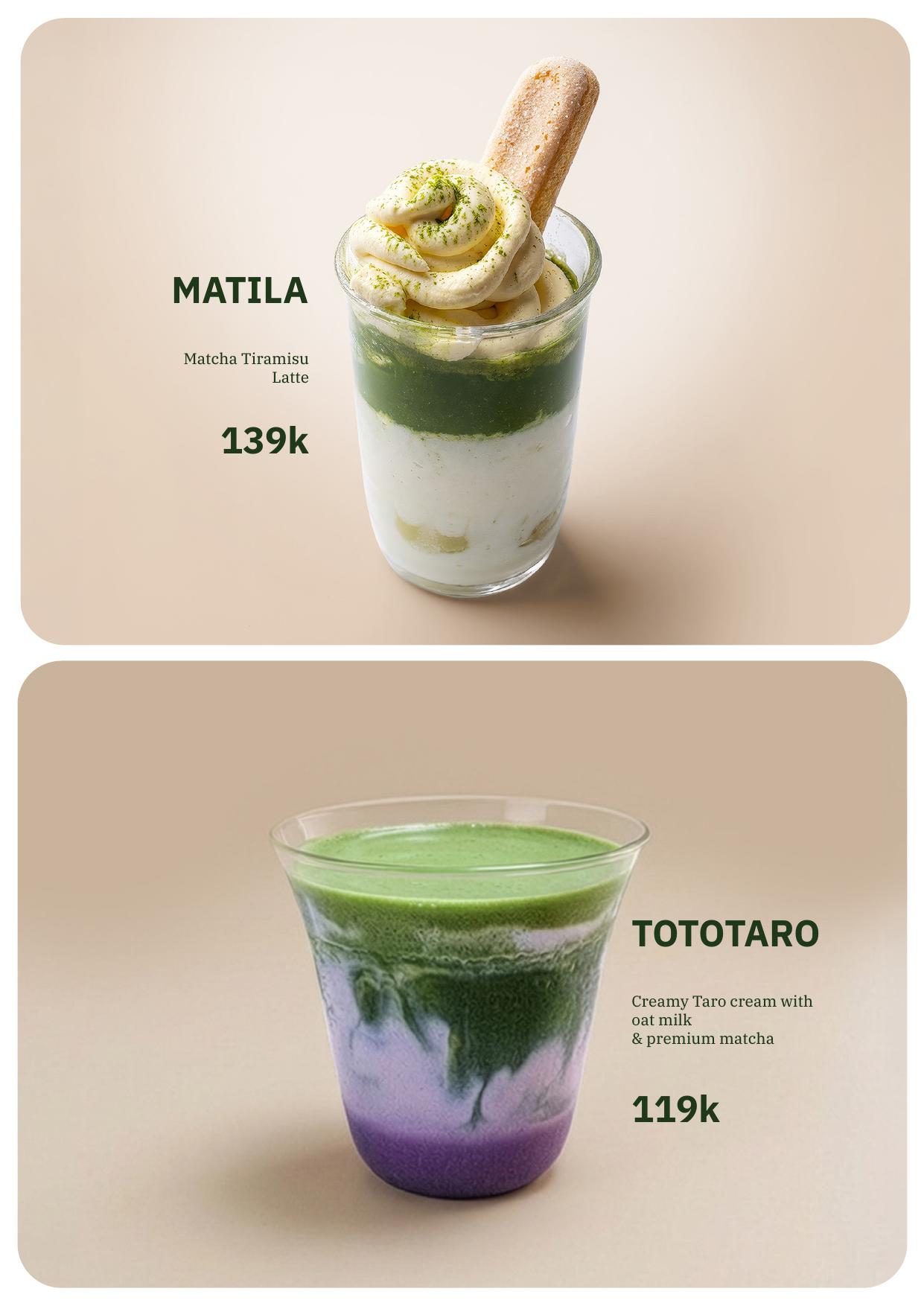
Coffee and sweets at Pasteur
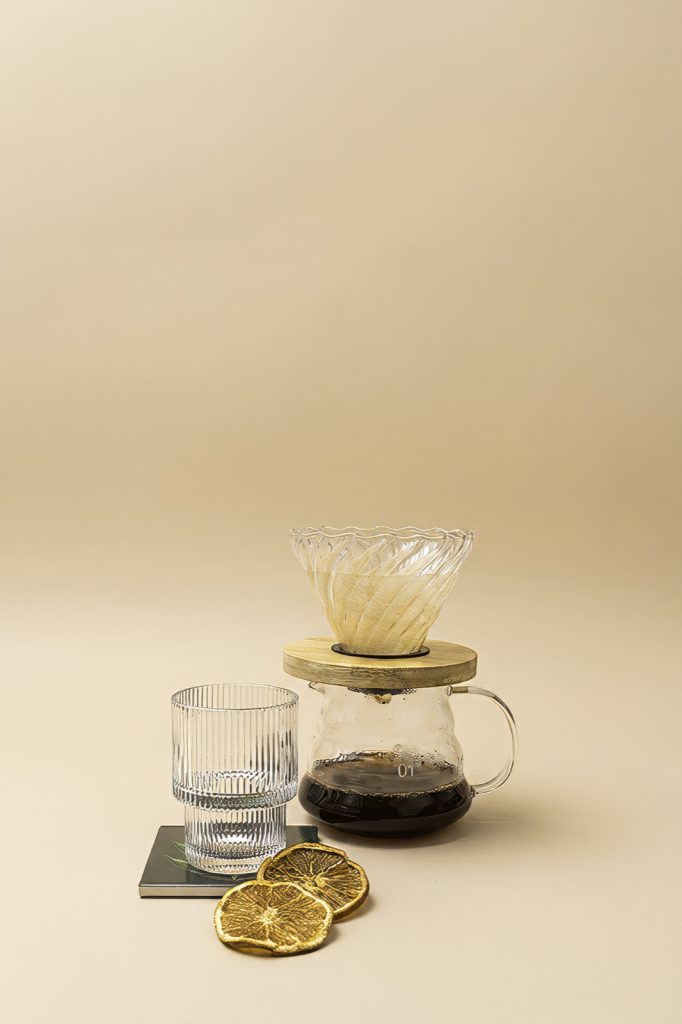
Coffee at MIDORI

Kushi Dango
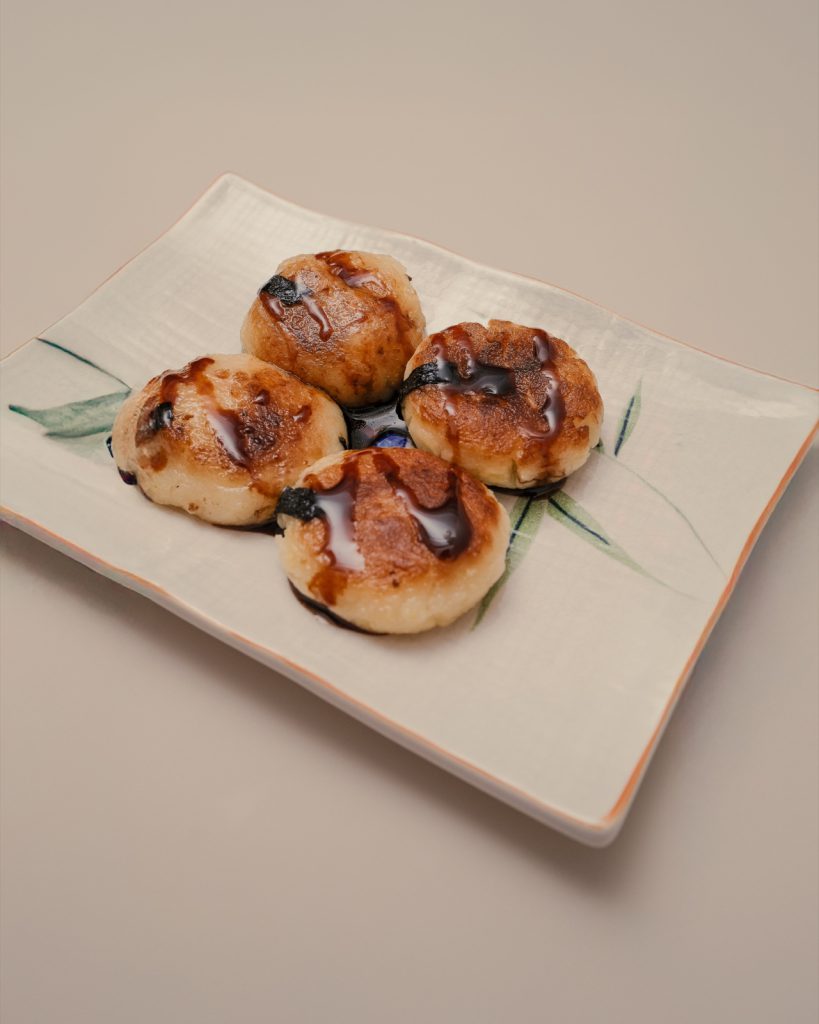
One Piece Mochi
Designing the matcha tin
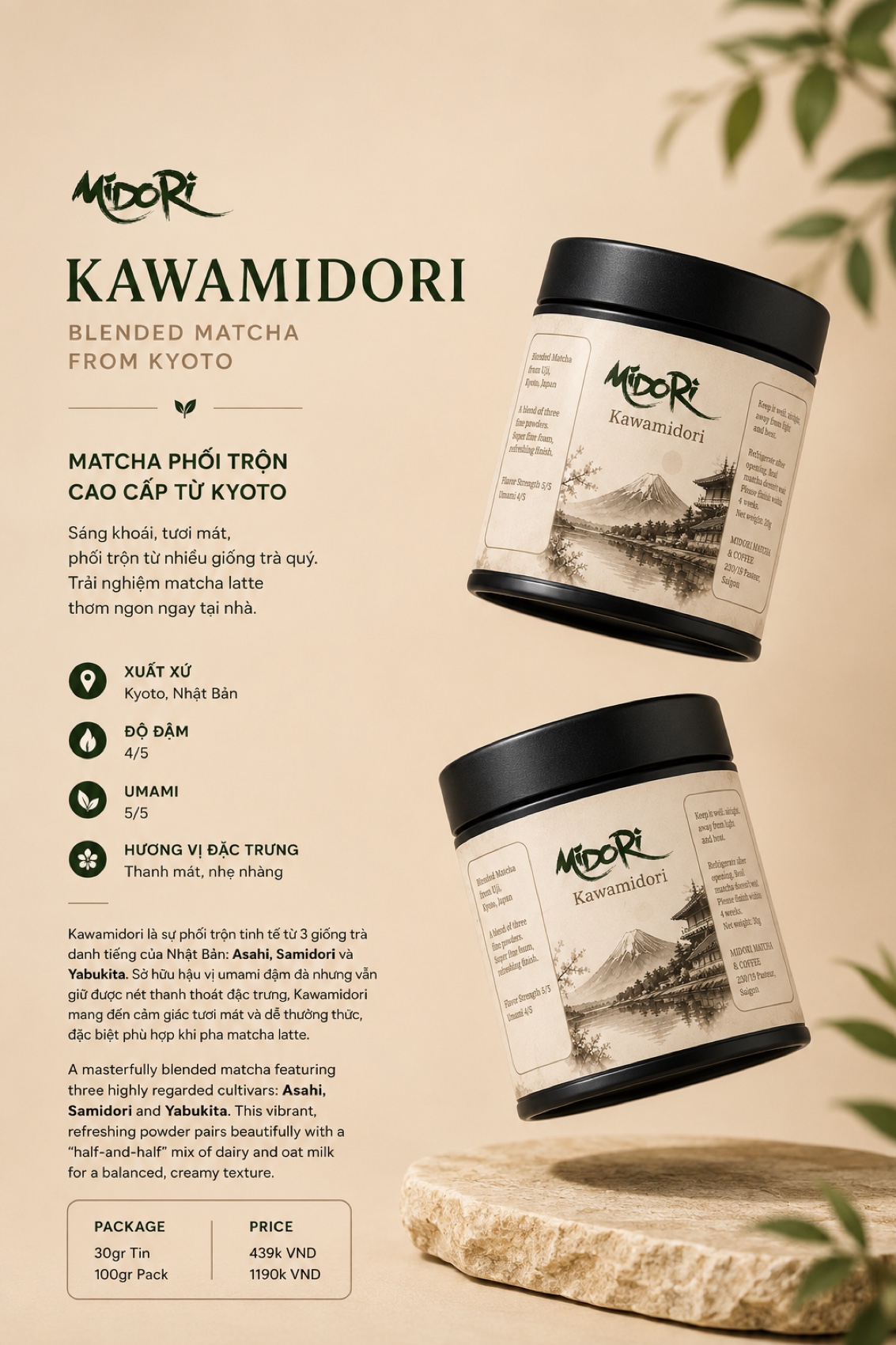
The tins had a practical brief. They had to read as one family on a shelf, distinguish each tea in the hand and stay identifiable from above. Kawamidori shows how that translated into production: a flat illustrated label for the body, a separate circular sticker for the lid and artwork prepared for different tin sizes.
Oku Midori, Kawamidori and Hako Midori each have an identity inside the range. The flat label and lid sticker below show the decisions that disappear once the tin is assembled.



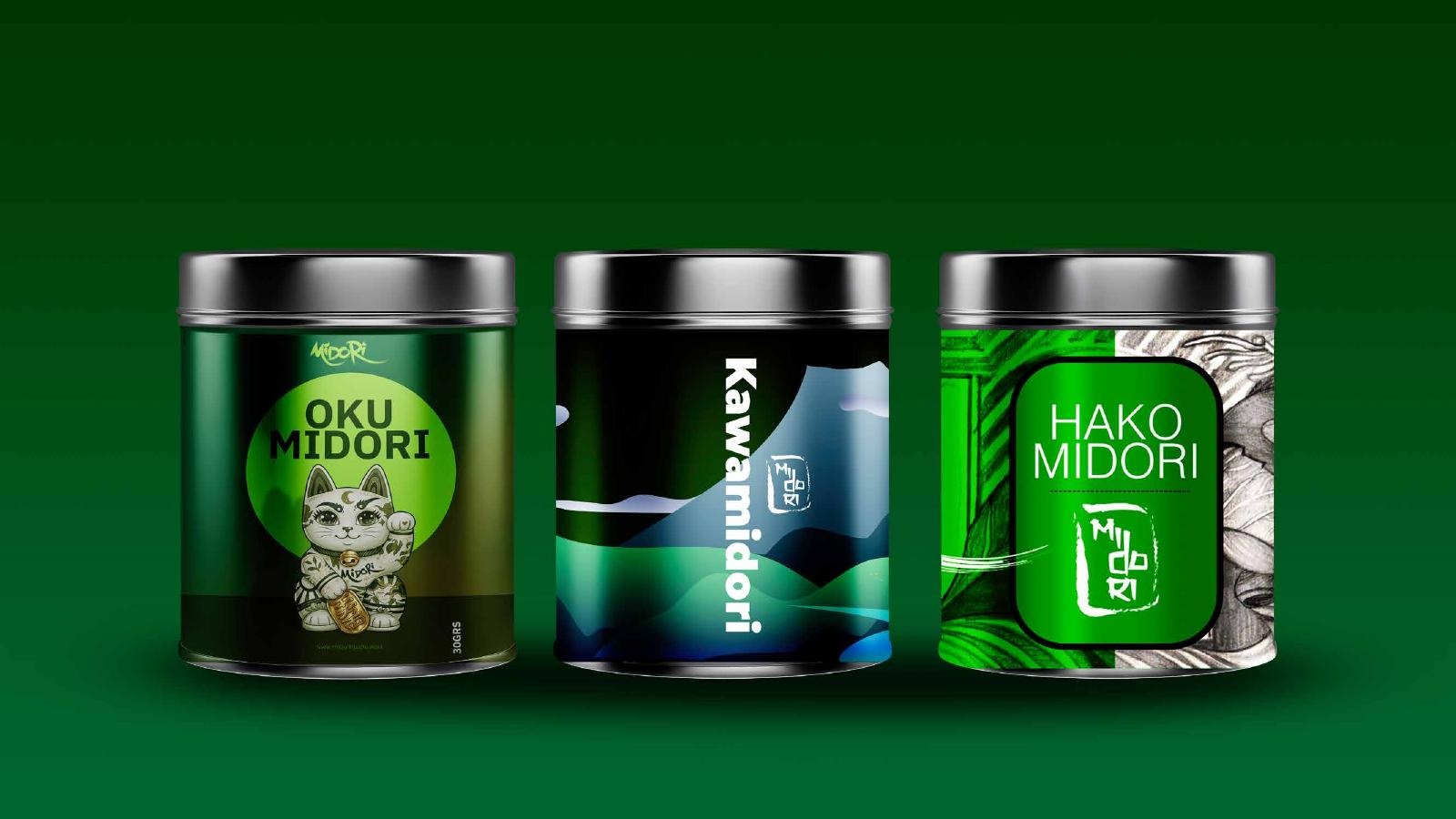
The tins across editions
Earlier Hakomidori and hojicha tins used green and red wraps with bold illustrated details. A later label family took a quieter approach: pale grounds, dark lids and a different illustration for each tea. Product photography records the earlier tins in use. The later product sheets document the label family across the range.



Explore the drinks menu spreads
MIDORI × Tuhu Ceramics
Hibi No Shiki
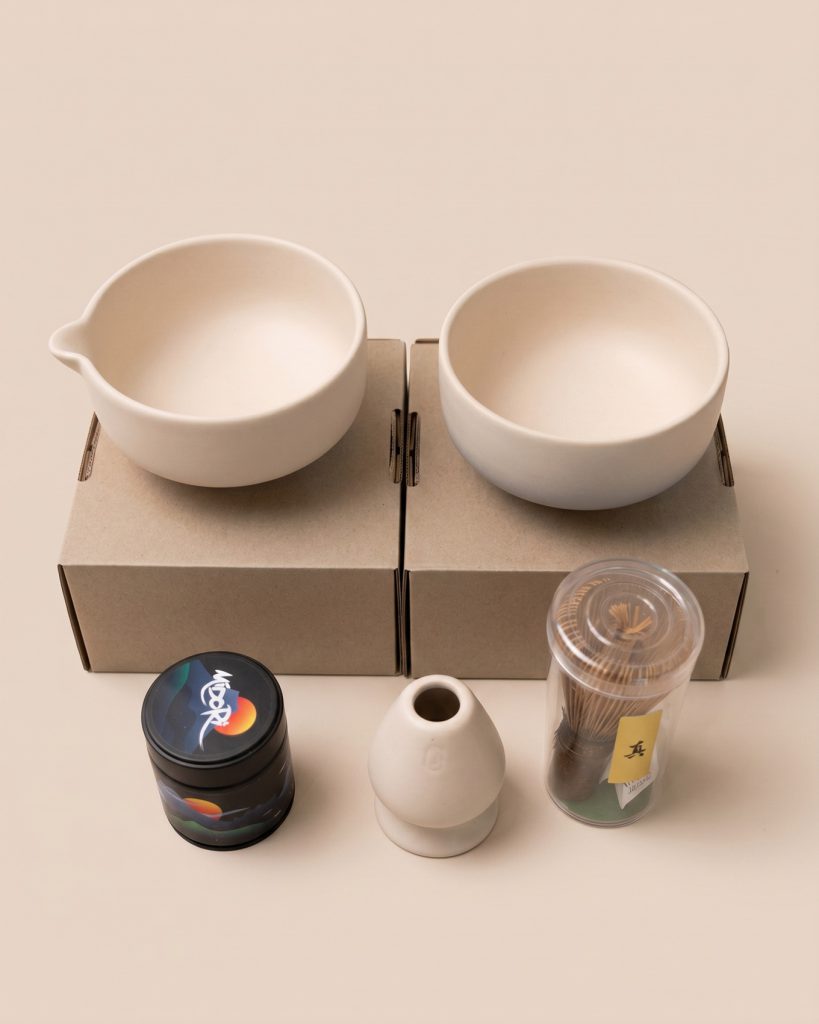
A piece of Vietnamese ceramics designed for the motions of making Japanese tea.
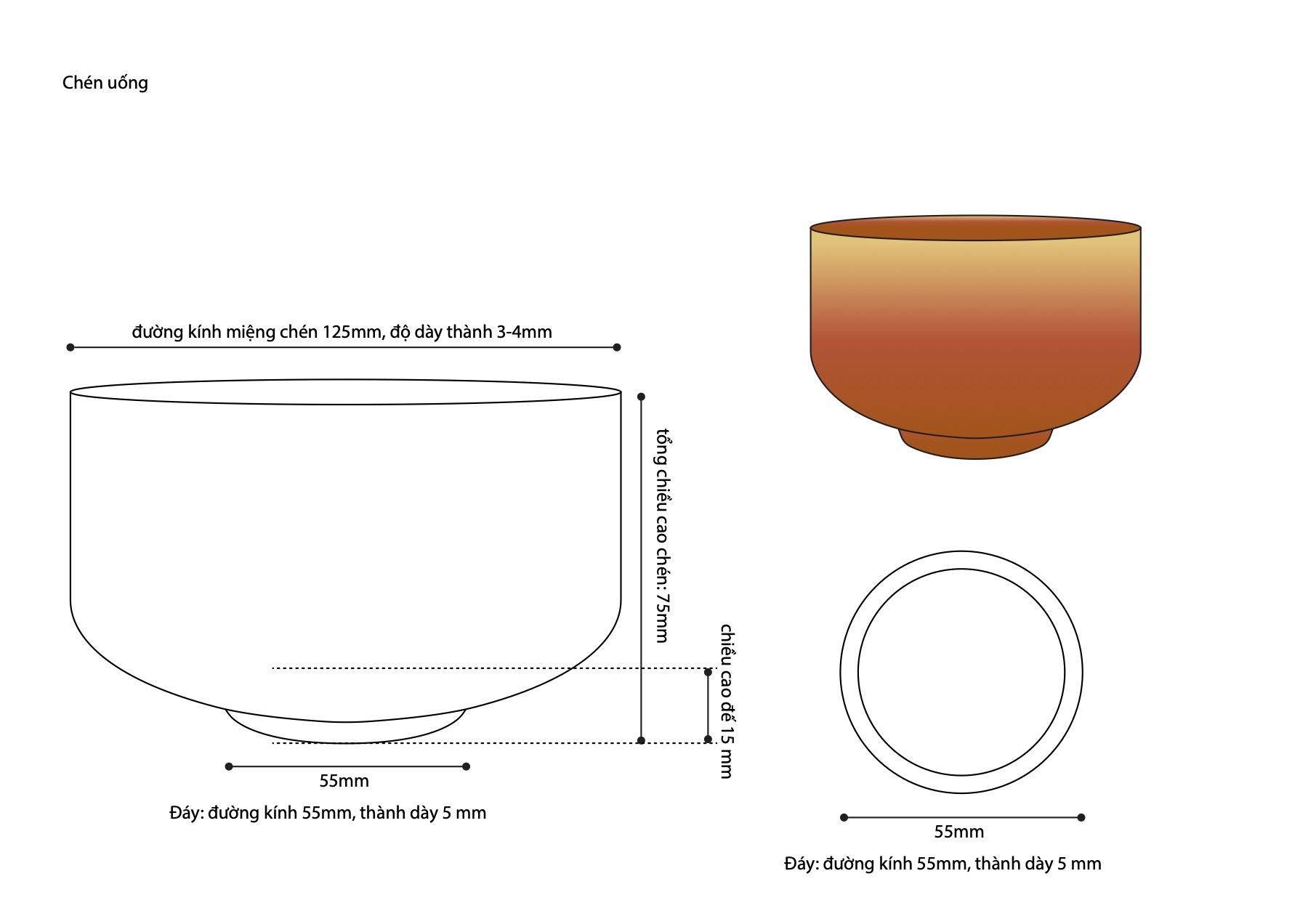
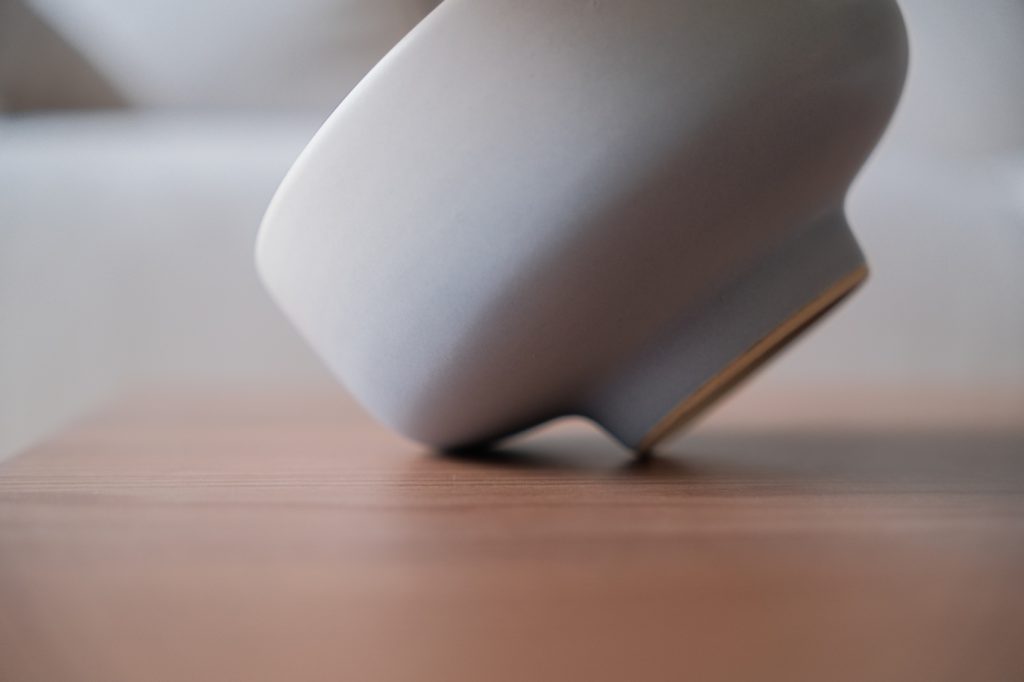
MIDORI brought a use case to Tuhu Ceramics: a bowl for whisking and a spouted vessel for pouring Japanese tea. The drawings record decisions about the profile, the base and the lip. Those are details a guest actually feels when they lift the bowl or tip the vessel.
The film follows the work into the ceramics studio, from the bench to finishing and glazing. The finished pieces came back to the café as tools for service. The gift-set photograph shows the same tools assembled so a guest could use them at home.


Seasonal projects
Two Mid-Autumn briefs
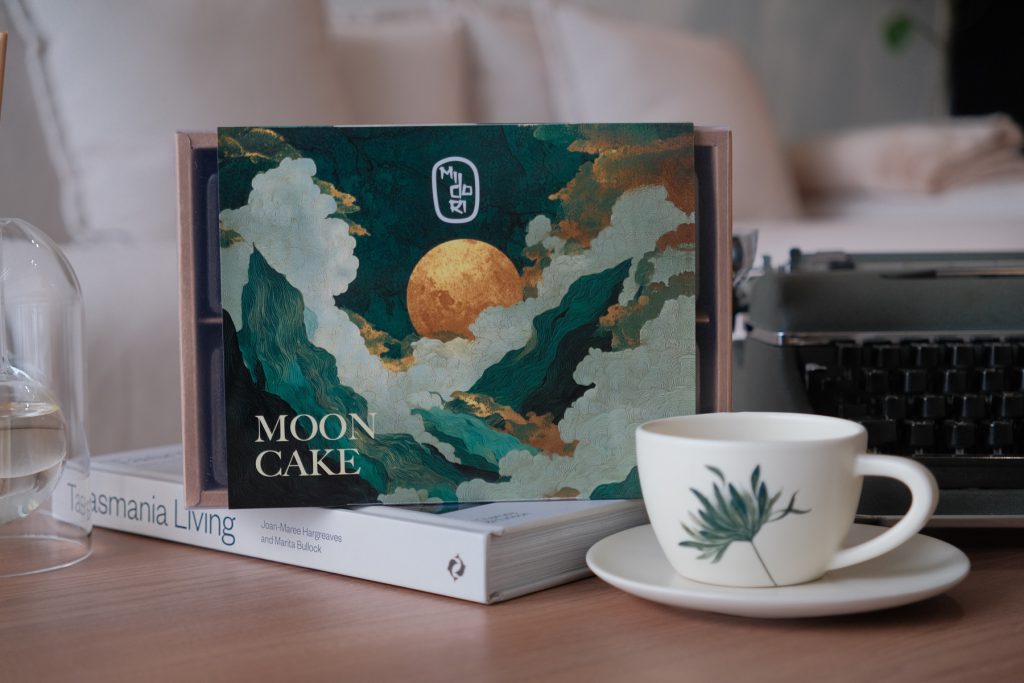
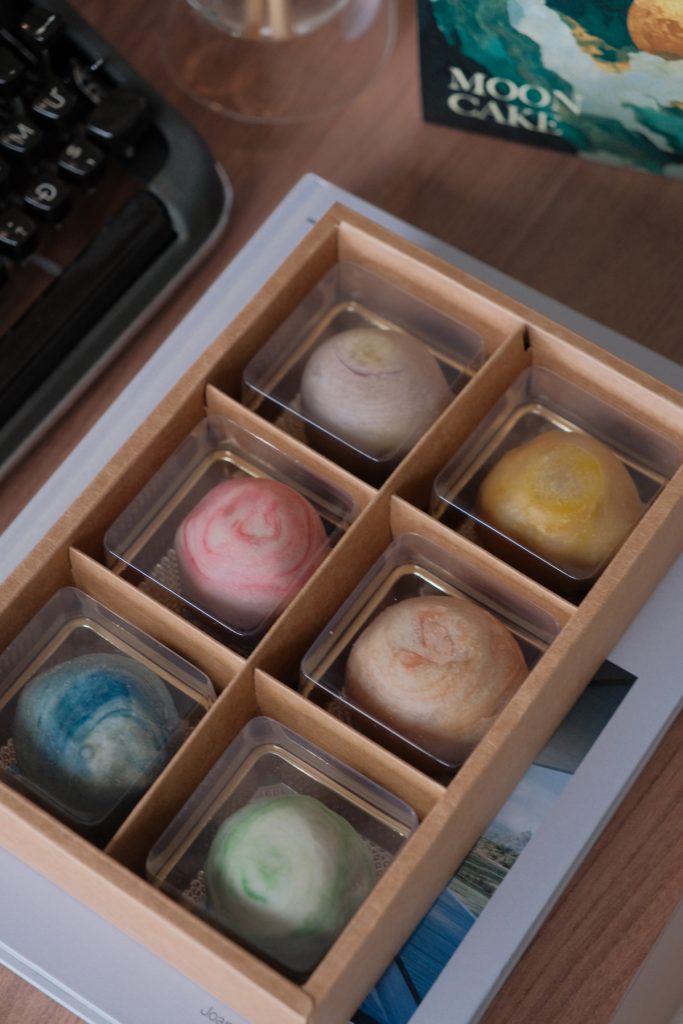
Two seasons show how a brief changes when a product has to reach people in a different way. In 2025, the box was designed around opening and sharing six mooncakes. In 2026, the Deluxe set paired cakes with tea and was prepared for corporate ordering, packing and delivery.
Mid-Autumn 2025
Six mooncakes, one landscape
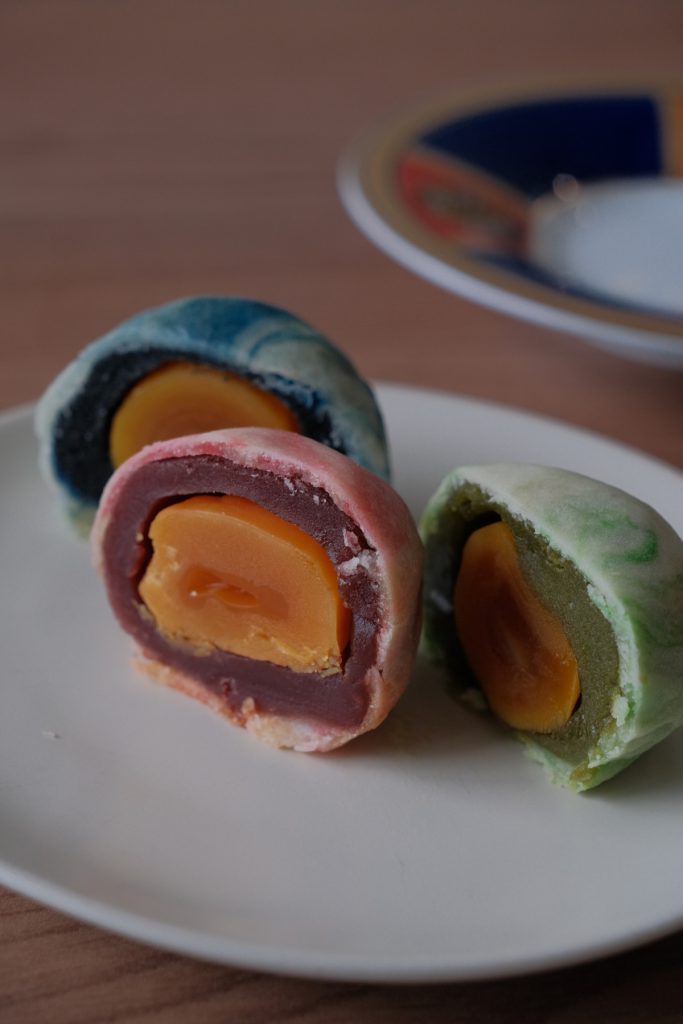
The 2025 sleeve sets up the reveal with a golden moon and layers of green. Inside, six compartments give the coloured pastries their own places. The sleeve artwork, photographs of the opened box and cut cakes show how the design carried through from print to the table.

Mid-Autumn 2026
Something to eat, something to brew
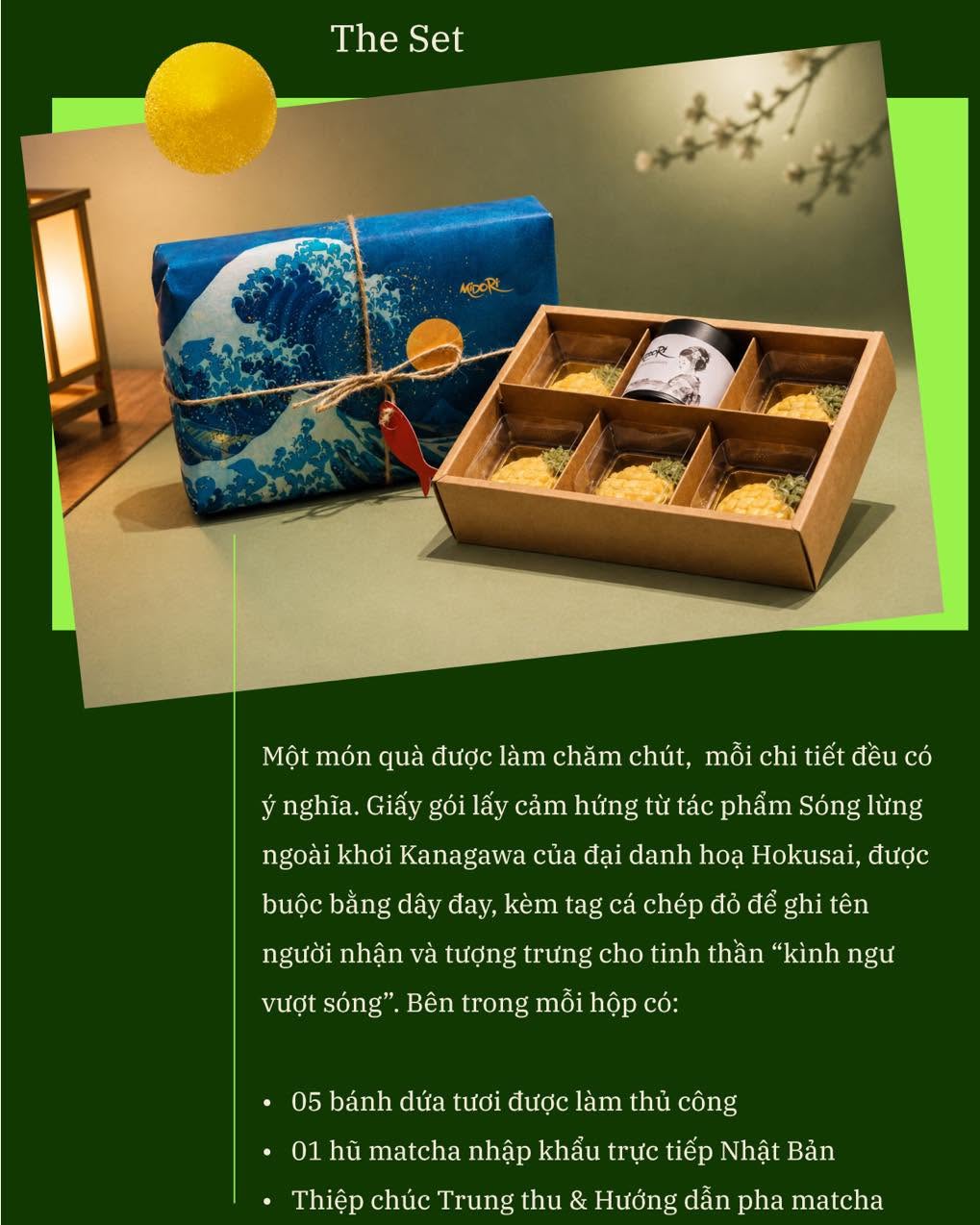
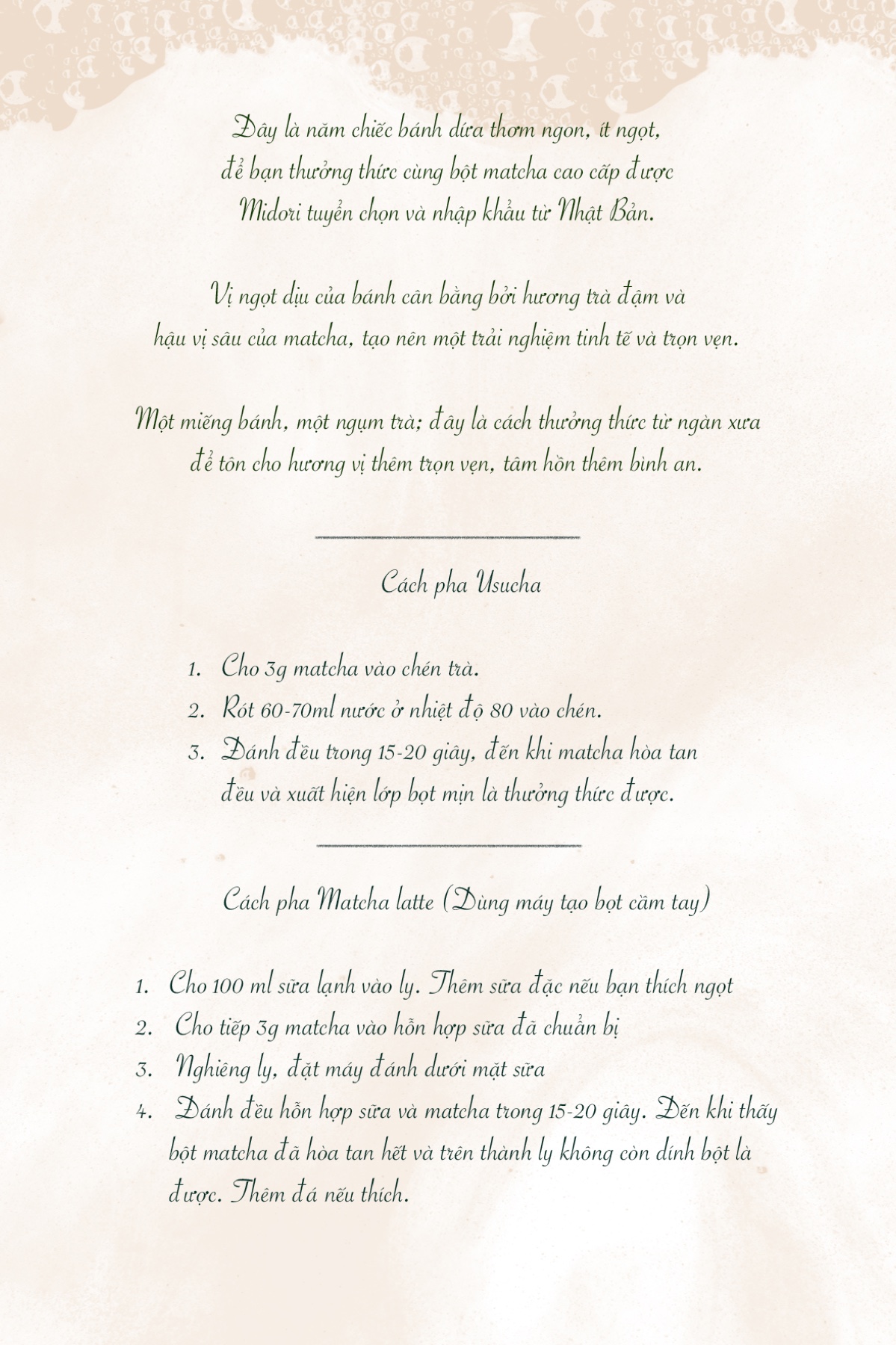
The 2026 Deluxe set paired five pineapple cakes with a 30-gram tin of Kawamidori. The wrap, card and tag had to make these different objects read as one gift and be practical to assemble for delivery. The paper drew on Hokusai’s Great Wave off Kanagawa, with jute twine and a red carp tag for the recipient’s name.
Fulfilment was part of the work: the studio had to carry the proposal through to a set that could be packed and handed over.
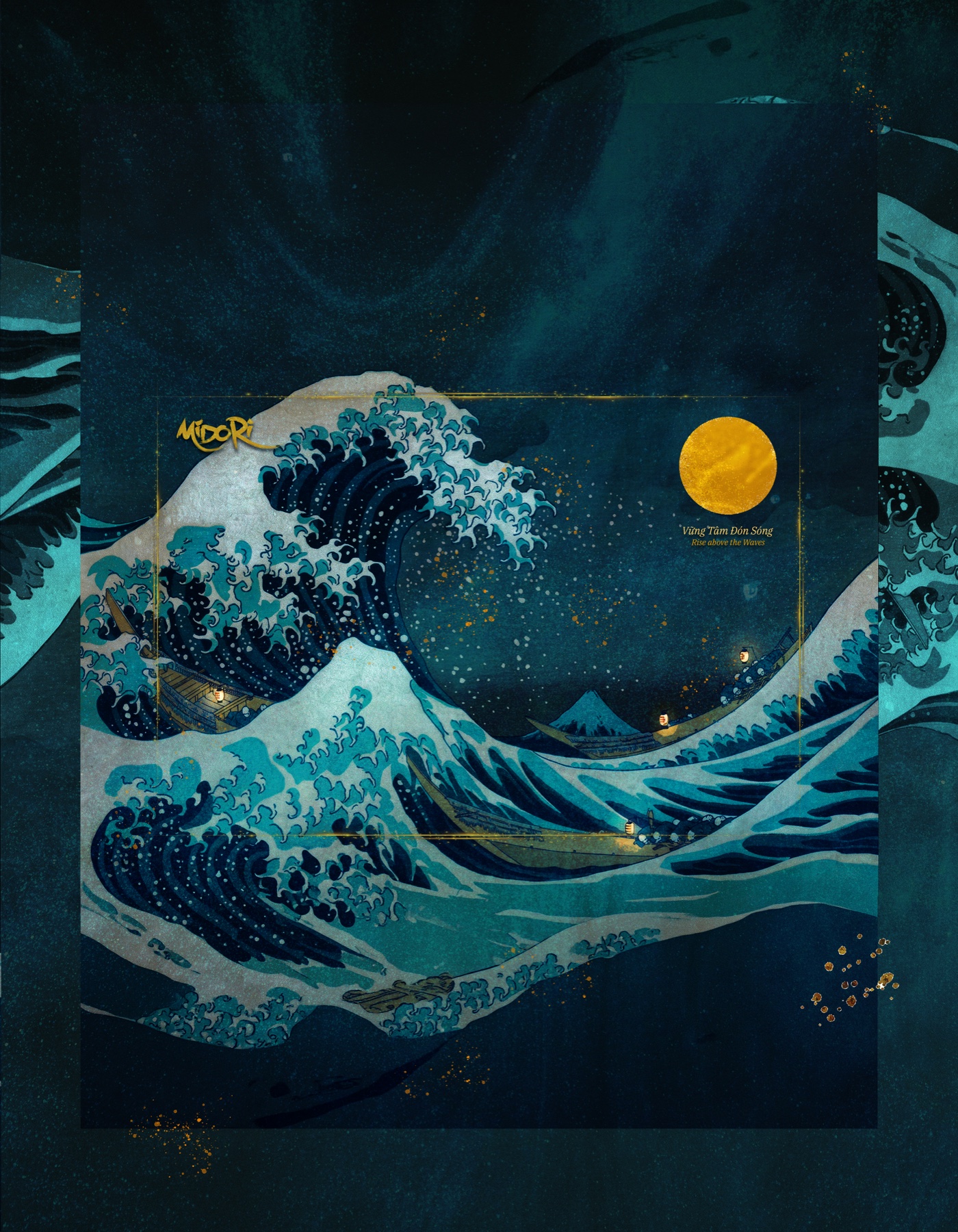
The finished gift set
Inside the blue wrapping, five pineapple cakes sit beside a tin of matcha. The campaign tells the story at three scales: the set on the table, the wave on the wrapper, and the strands of fresh pineapple visible when a cake is cut open.


2024–2026 · Workshops and Tea Talks
The friends around our table
The workshops and Tea Talks grew out of friendships. We invited people whose work we admired to share something they knew well: how to taste tea, how to arrange flowers, how to listen to a record or how to get a film made. The long table made it possible to learn from them up close.
These afternoons owe their character to the friends who gave us their time and trusted MIDORI with their practice.

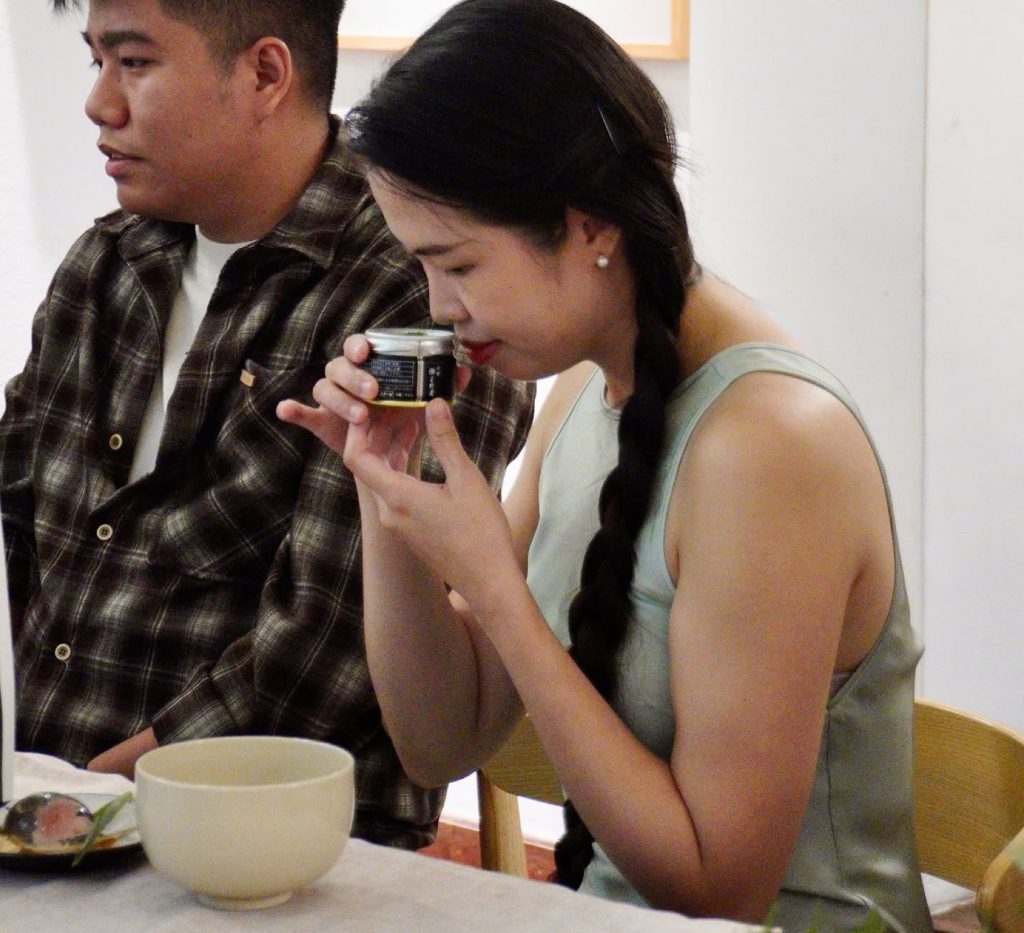
Kim Anh Đoàn · Matcha Essentials & Beyond Matcha
Kim Anh Đoàn helped us turn the gestures of making matcha into something guests could learn with their own hands. Together we made time to smell the tea, try the whisk and taste what changed in the cup. These sessions made the care behind the drinks visible to the people we serve them to.


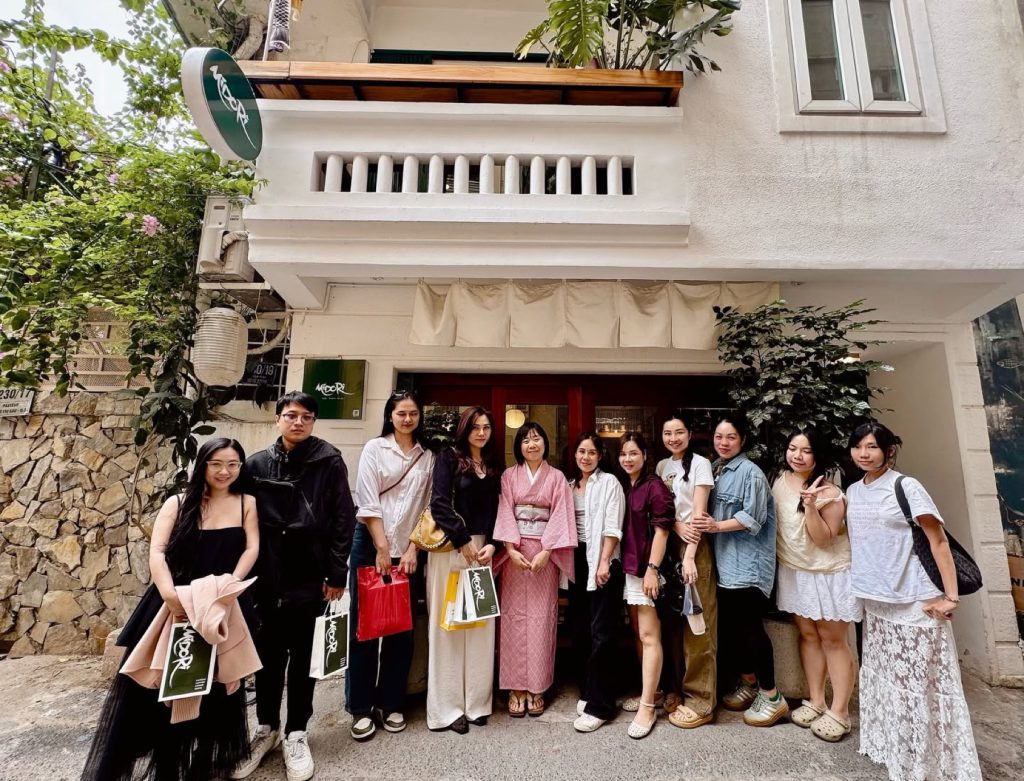
Hoàng Lê Đăng Khoa and Hitoto · New Year at MIDORI
For Hatsuike on 25 January 2026, Hoàng Lê Đăng Khoa led an Ikenobo ikebana workshop. We served tea and daifuku while guests worked with stems and watched their arrangements take shape.
At a separate New Year gathering, our friends at Hitoto shared another set of traditions. Guests made mochi together and played Japanese New Year games.


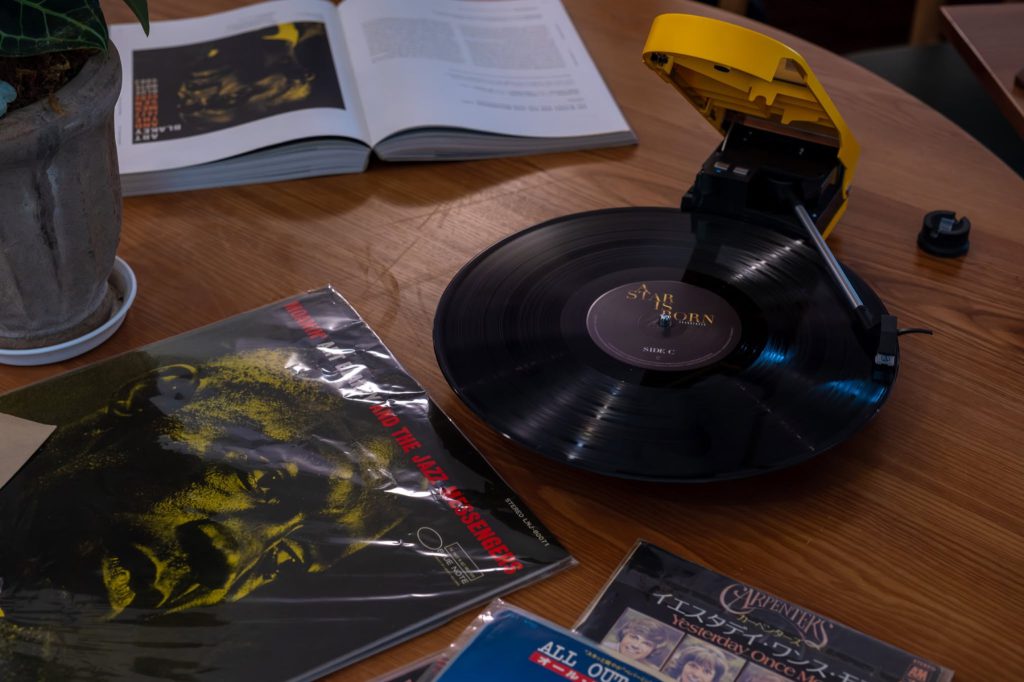
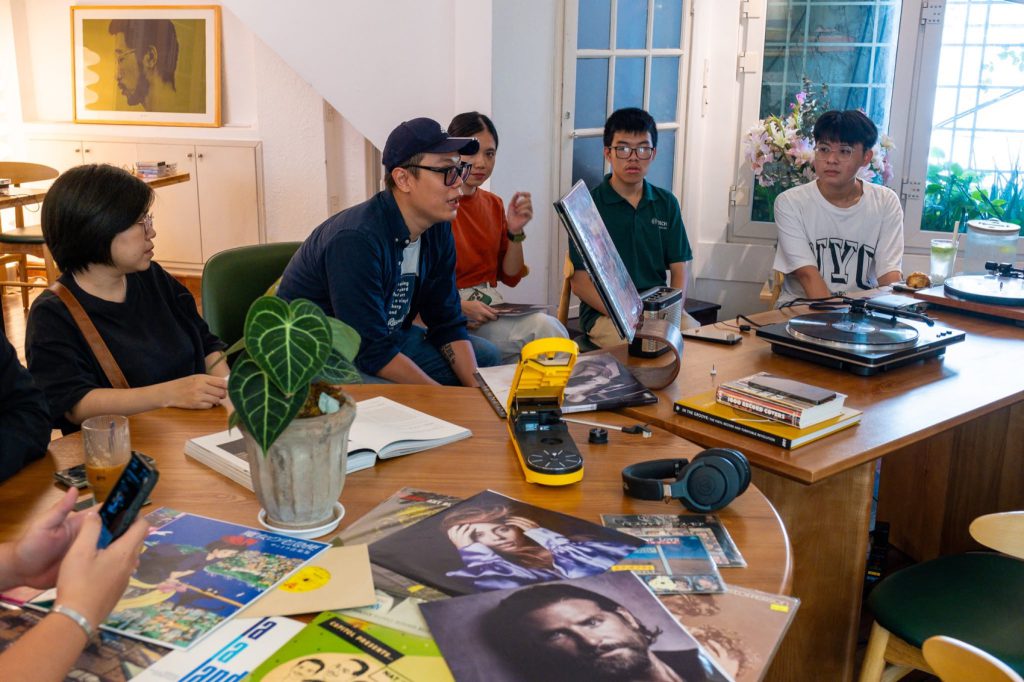
Vinyl Saigon and Sturmfrei Records · Listening together
Vinyl Saigon and Sturmfrei Records brought their records and equipment to the long table for Vinyl is Simple. They gave guests a way into listening on vinyl by putting the sleeves, records and turntable within reach. A separate session, Rewind to the Future, brought the conversation back to cassettes.


Hàm Trần and Livio Grossi · Tea Talks
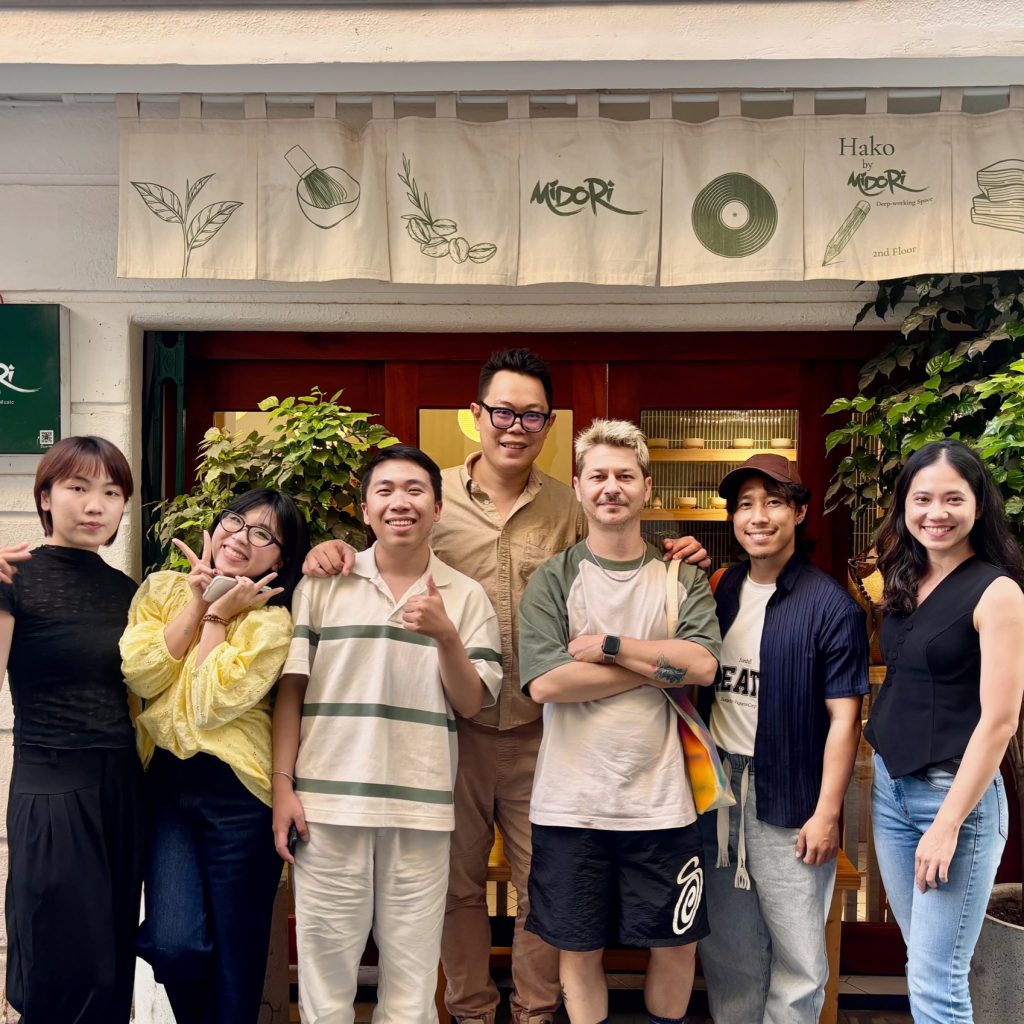
Director Hàm Trần opened Tea Talks on 21 March 2026. He shared what it takes to turn a screenplay into a film in Vietnam, including the practical work of finding the resources to make it. His visit set the tone for the series: bring the work into the room and make time for questions.
Livio Grossi, Khương’s former boss and longtime friend, brought his experience as a creative director to the second Tea Talk. At Hako, he sat down with a small group over matcha and tiramisu to talk about AI, burnout in agencies and how to keep making work you care about.


New Year · The Zodiac Darumas
Giving a wish a shape
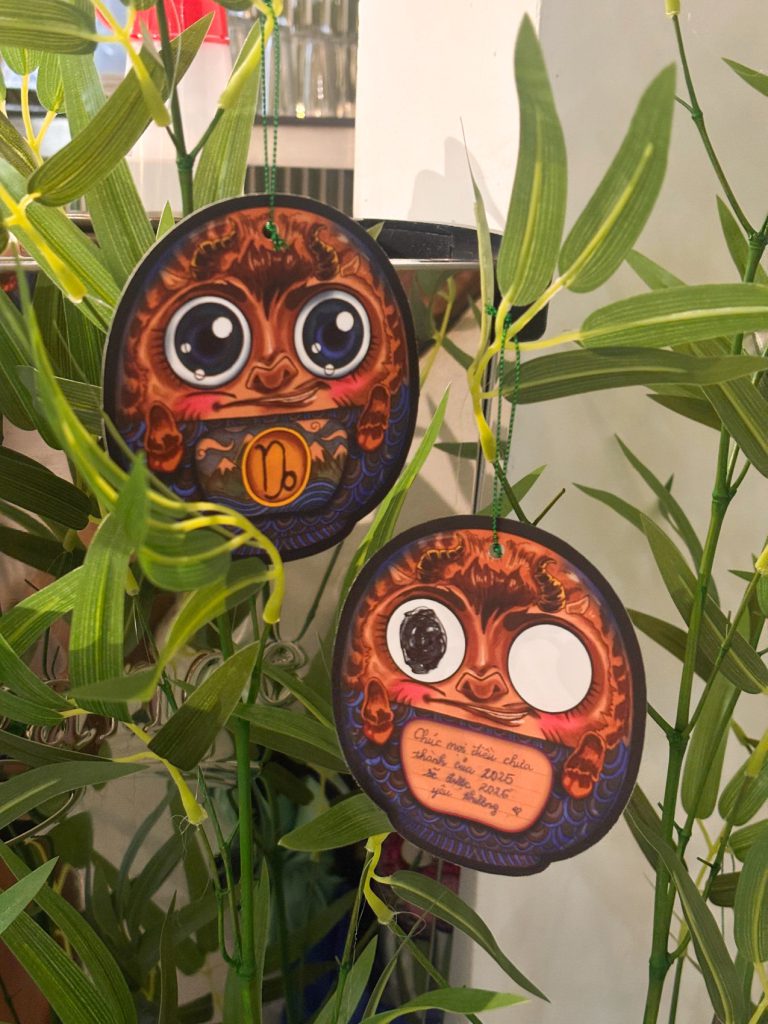
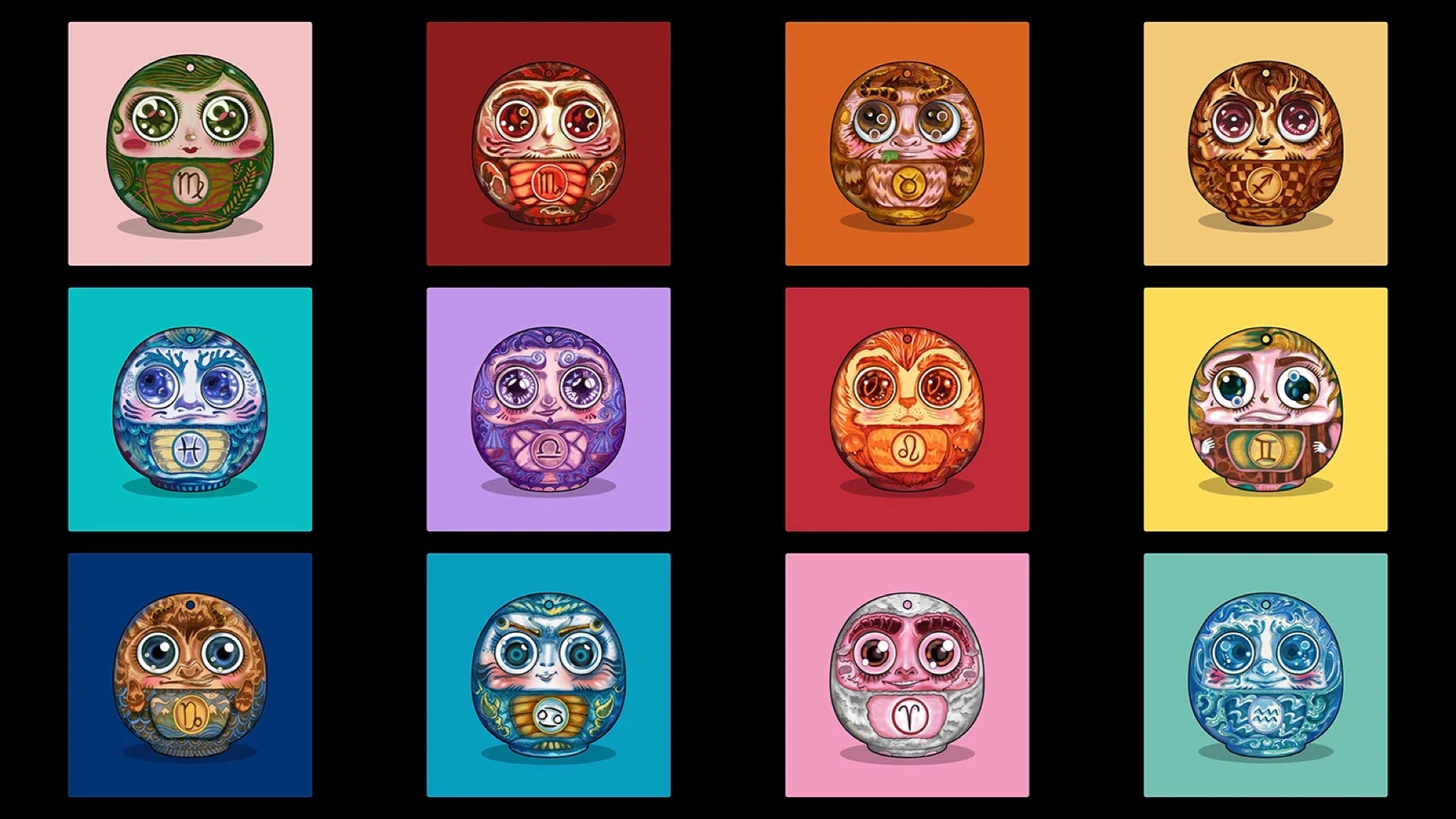
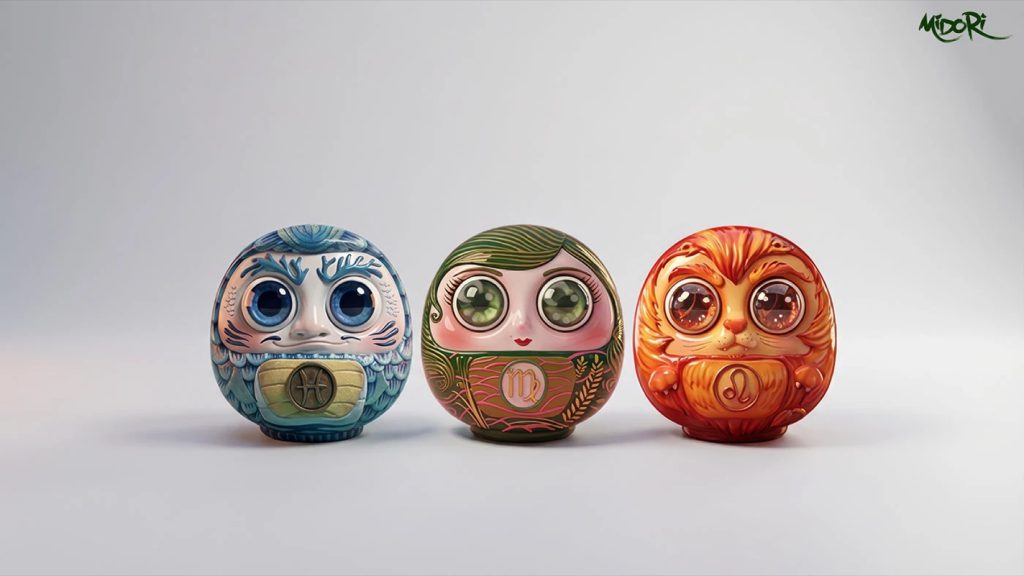
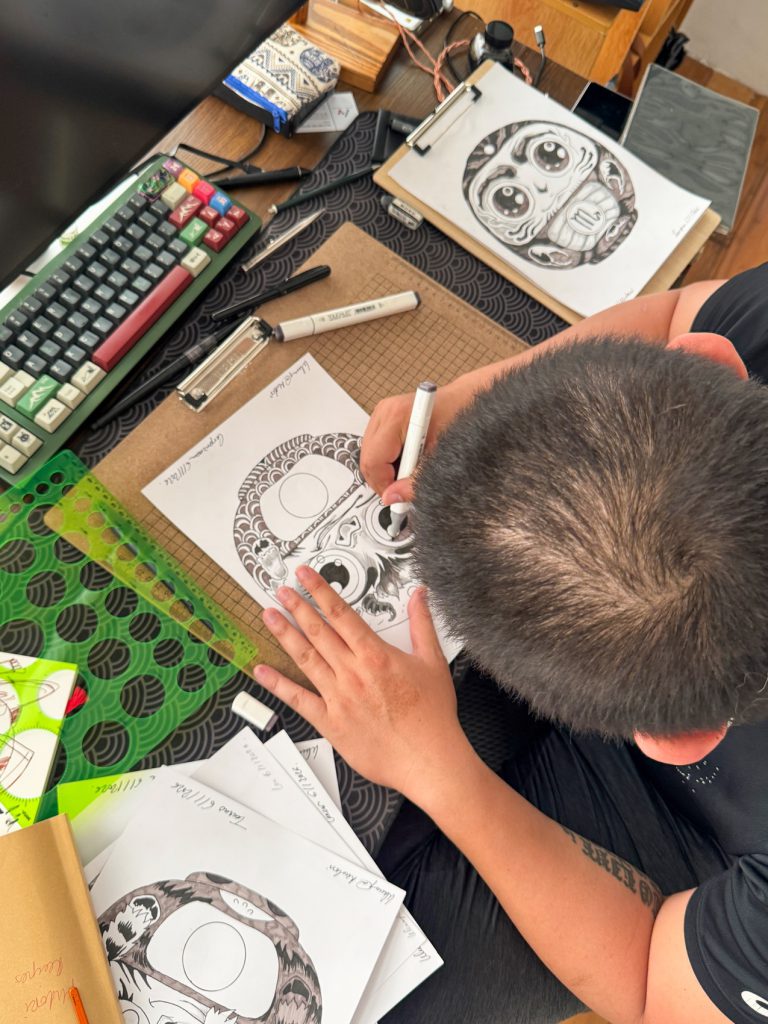
MIDORI Studio combined the Japanese daruma with the twelve signs of Western astrology. Each character started on paper. The team then worked in colour, developed three-dimensional visualisations and produced printed pieces for the café. The zodiac gave guests a personal way into the New Year ritual of setting a goal and returning to it.

MIDORI × Oatly × New Viet Dairy · June 2026
Oatmakase
Oatmakase began with a decision about a daily ingredient. Khương publicly explained why MIDORI was changing its oat milk supplier after a recruitment campaign by its previous brand. Moving to a more expensive oat milk was a choice the studio had to carry into daily service.
When Oatly heard that MIDORI was looking for ingredients that met its standards, the team sent eight cases of oat milk. That practical gesture grew into a project with Oatly and New Viet Dairy. MIDORI took inspiration from Oatly’s matcha recipes and developed a three-drink set for Pasteur.
Launched on 13 June 2026, the tasting put the tea team in charge of what came next. Guests left the regular menu aside and watched the drinks being made in front of them. The illustrated poster, cards and vessels carried the idea from the invitation to the counter.

Oatmakase · Original event poster.
Project notes on LinkedIn · Khương on changing suppliers · How Oatly responded

The Oatmakase tasting counter at Pasteur.
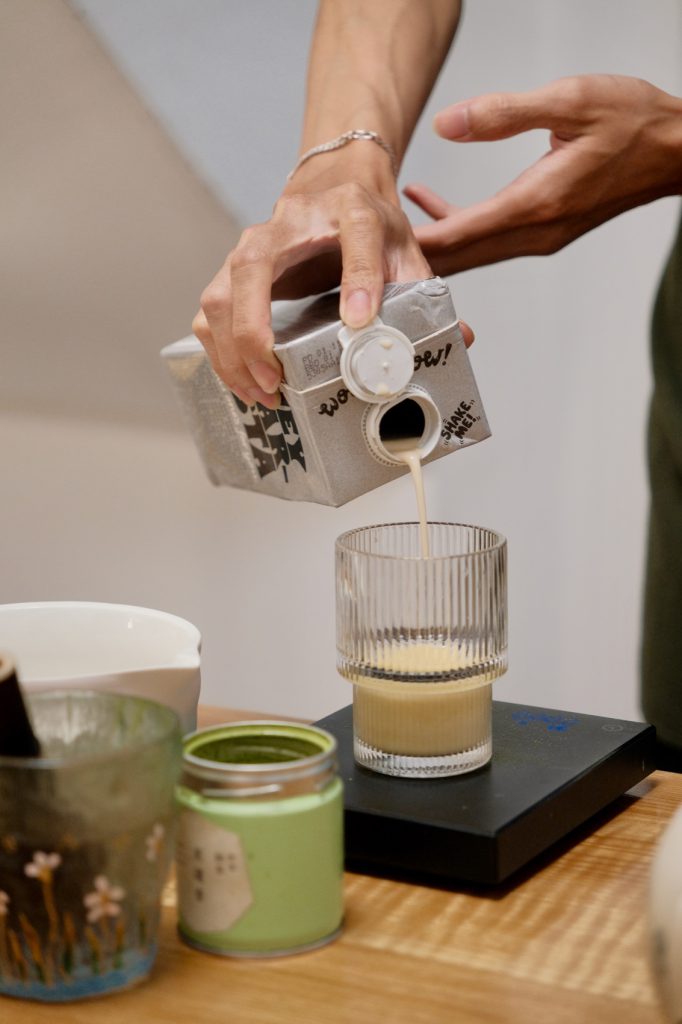
Preparing a drink with oat milk.

A finished drink from the Oatmakase project.
2026 · Bâng Khuâng, Thái Văn Lung
Growing beyond Pasteur
A second address gave the founders a different operating brief. The drinks and pastries already belonged to MIDORI. Bâng Khuâng added a kitchen and a lunch service, with their own timing, sourcing and menu decisions.
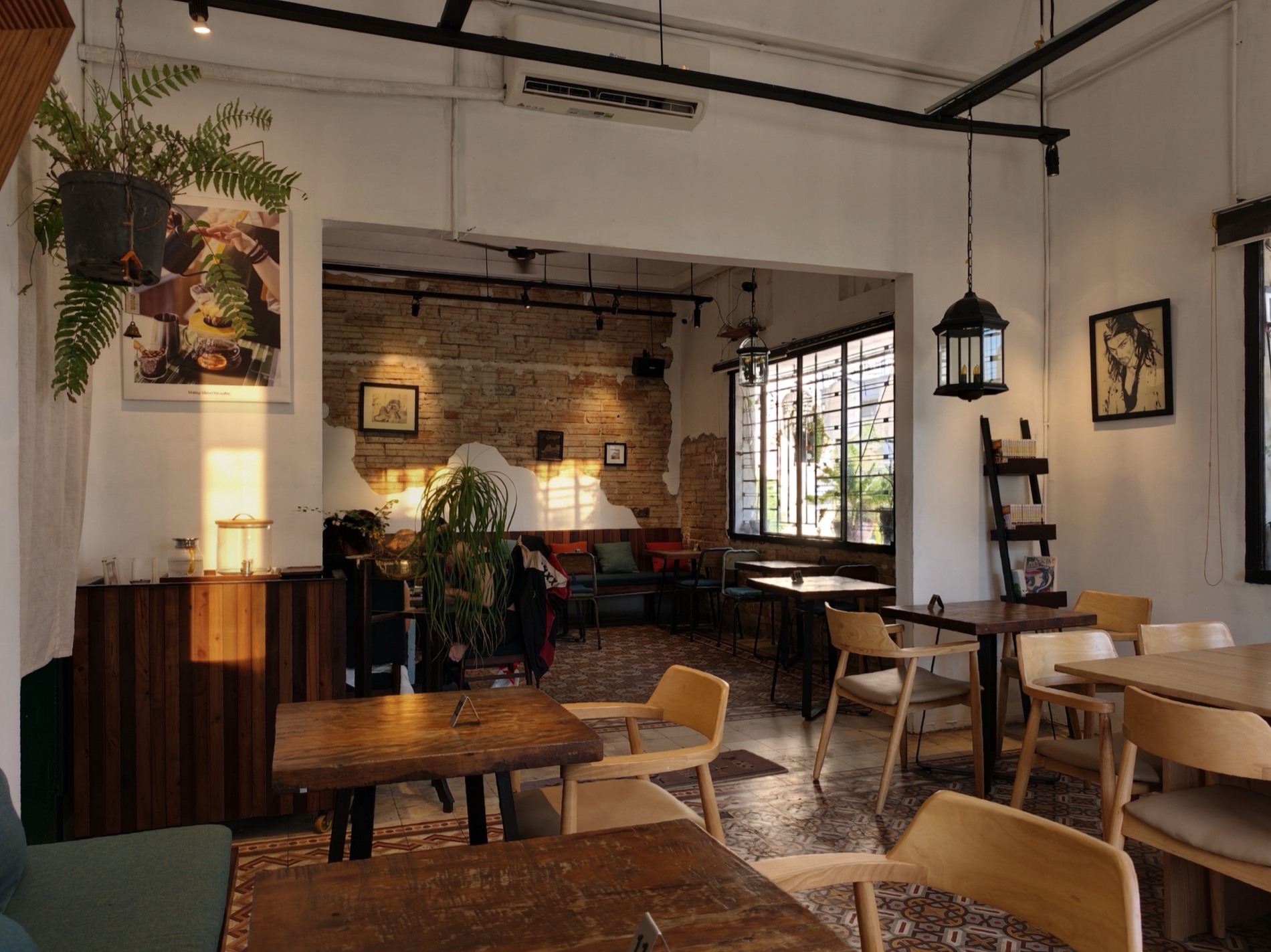
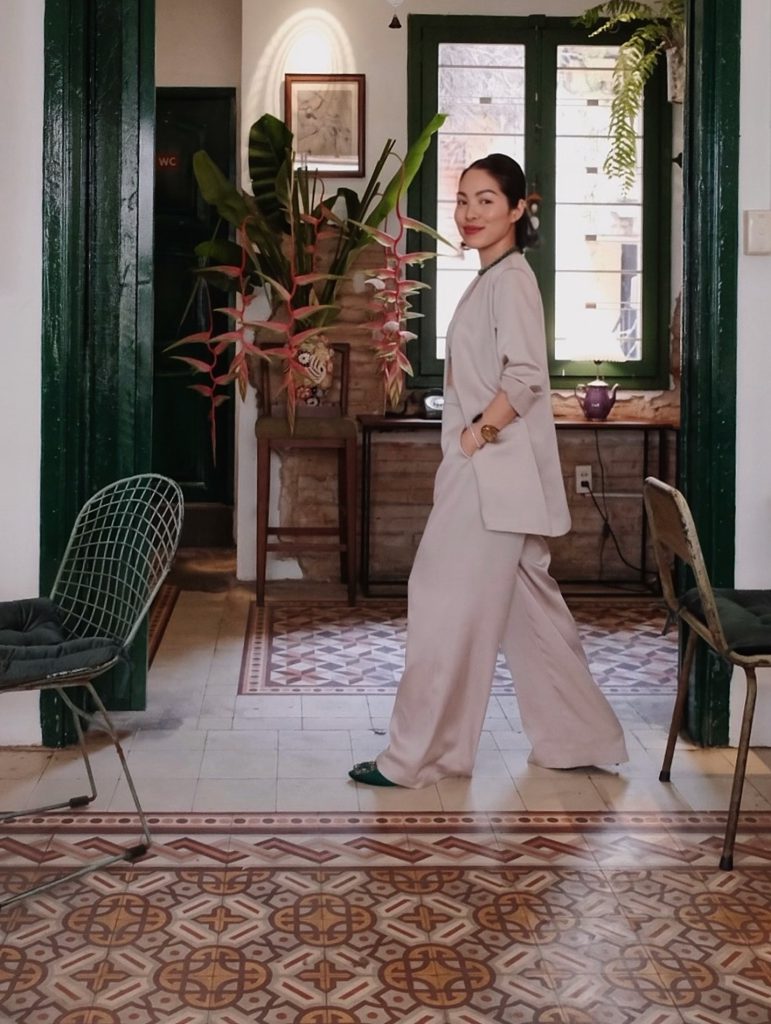
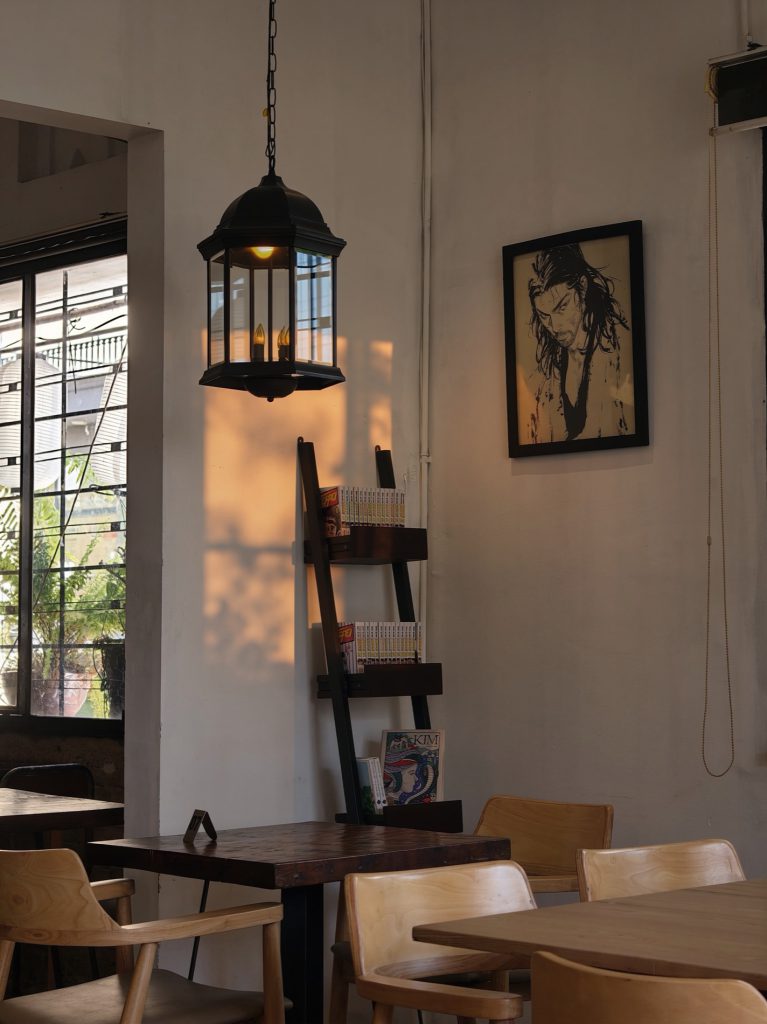
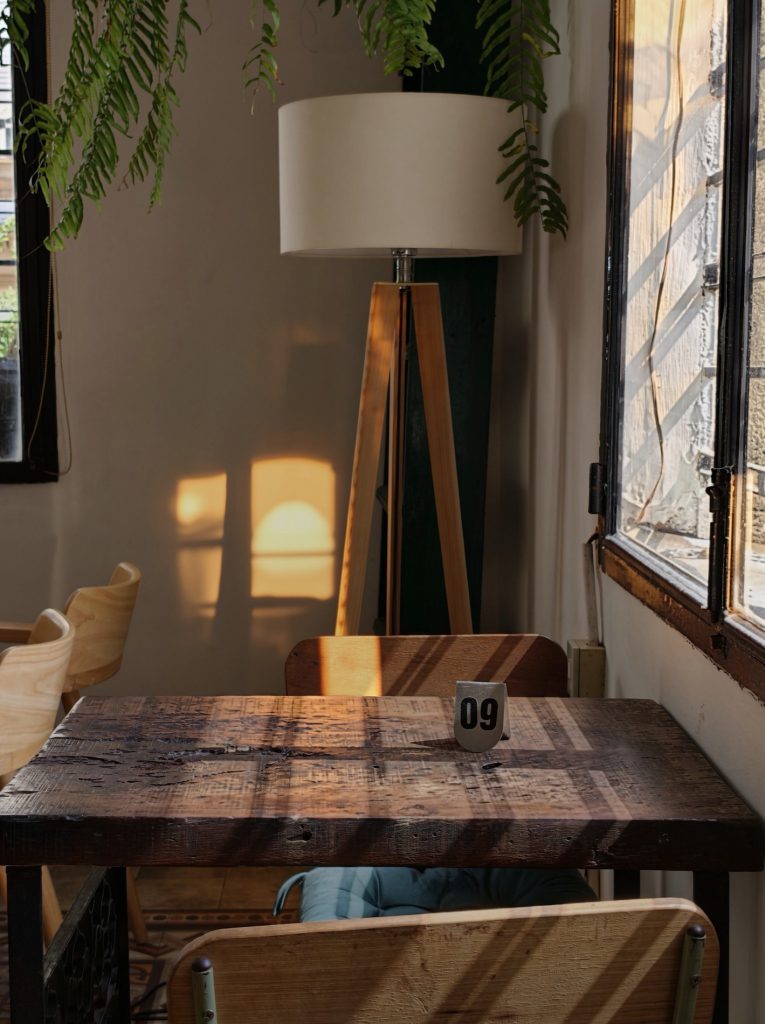

Bâng Khuâng, a place for lunch
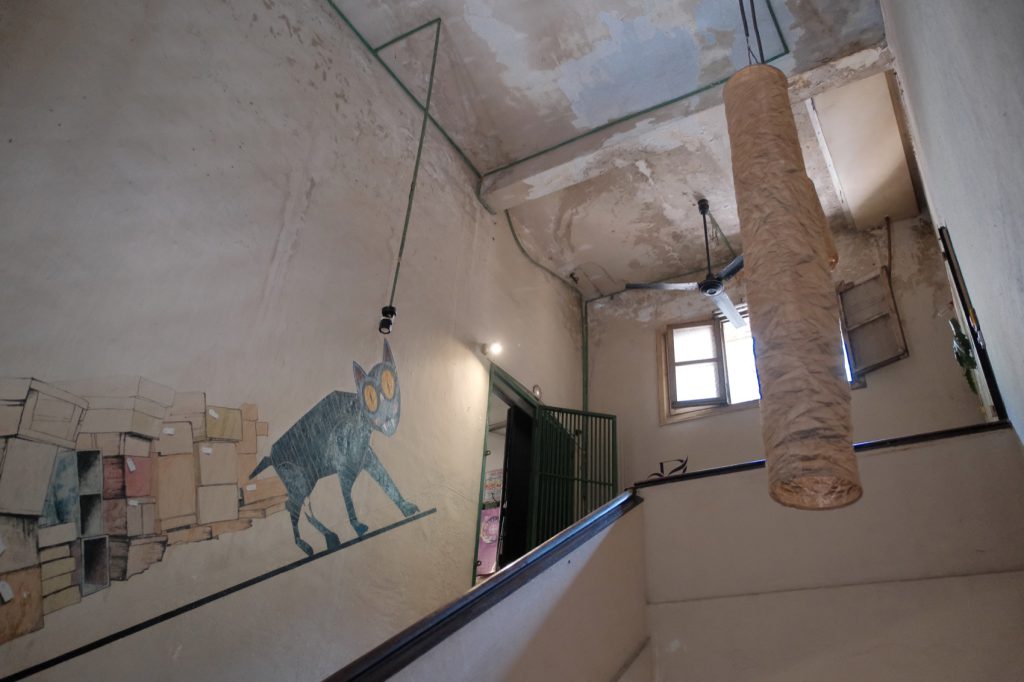
Upstairs at 9 Thái Văn Lung, the founders kept the Bâng Khuâng name. They carried the drinks and pastries across, then built the food offer around a different reason to visit: lunch in the middle of a working day.
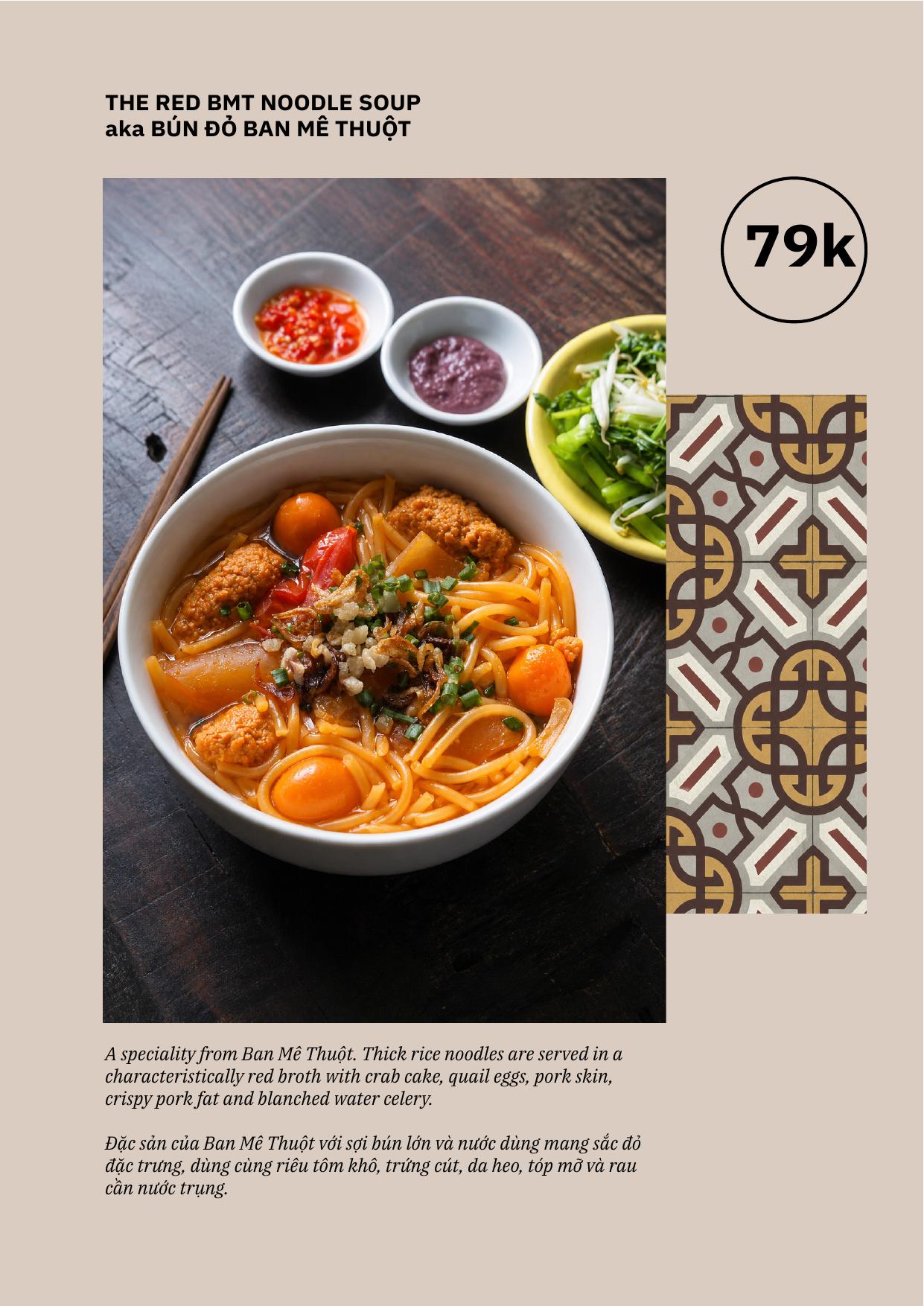
At launch, the kitchen introduced a market-led mâm cơm, a family-style meal shaped by what was available that day. A separate menu included dishes such as Đà Lạt-style meatball bánh mì and Ban Mê Thuột red noodles. The offer gave people working nearby a reason to spend their lunch break at MIDORI.
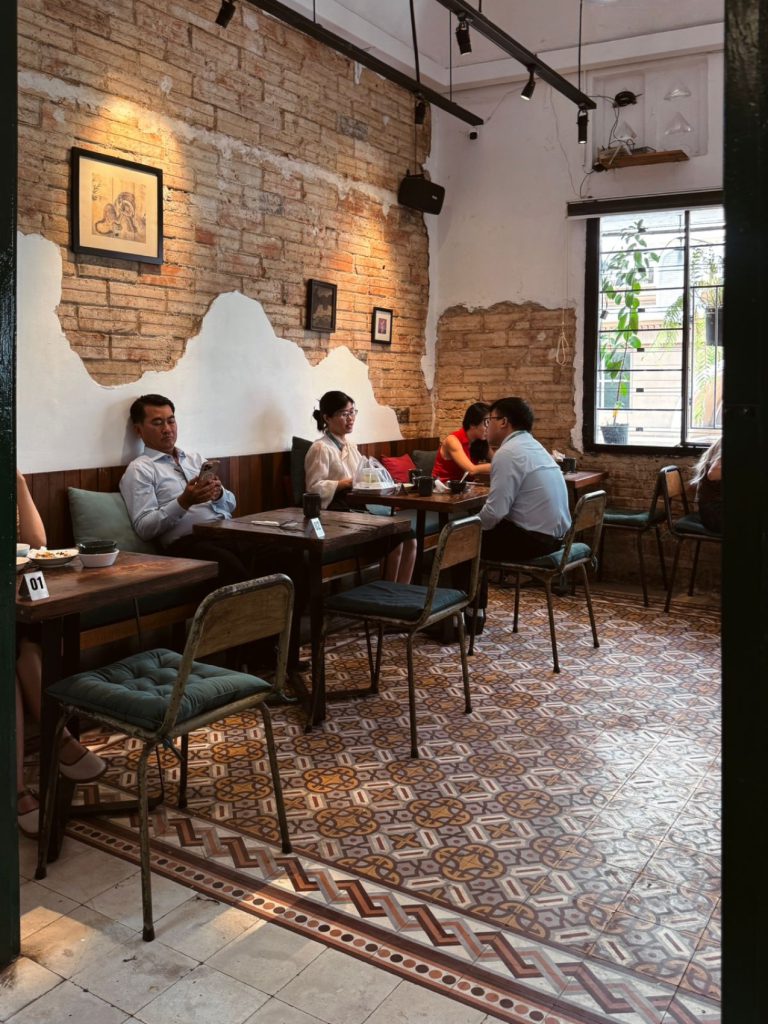
Bâng Khuâng with guests at the tables

A menu for the lunch hour
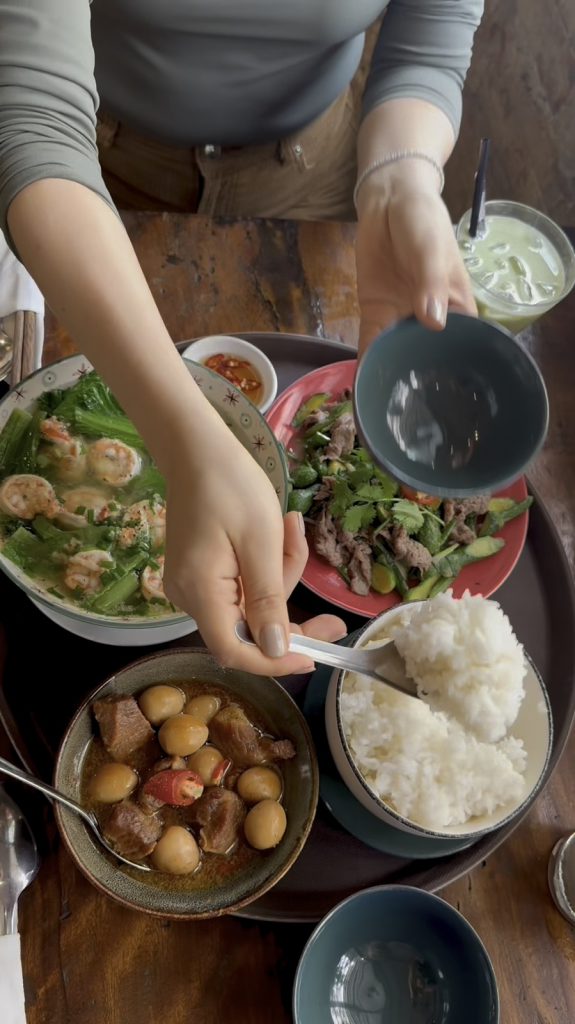
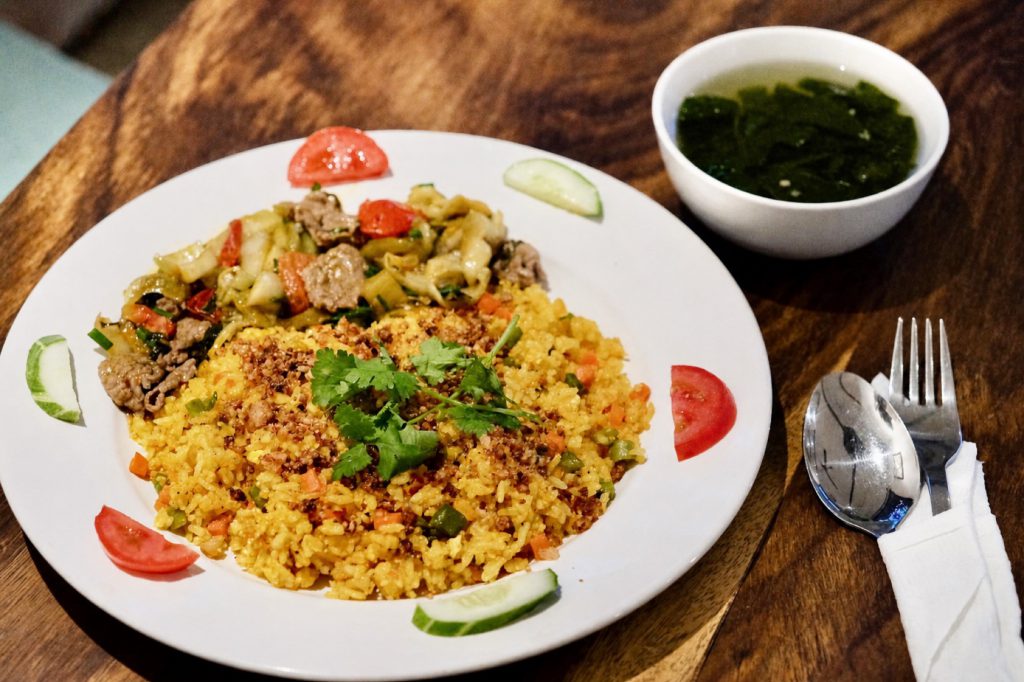
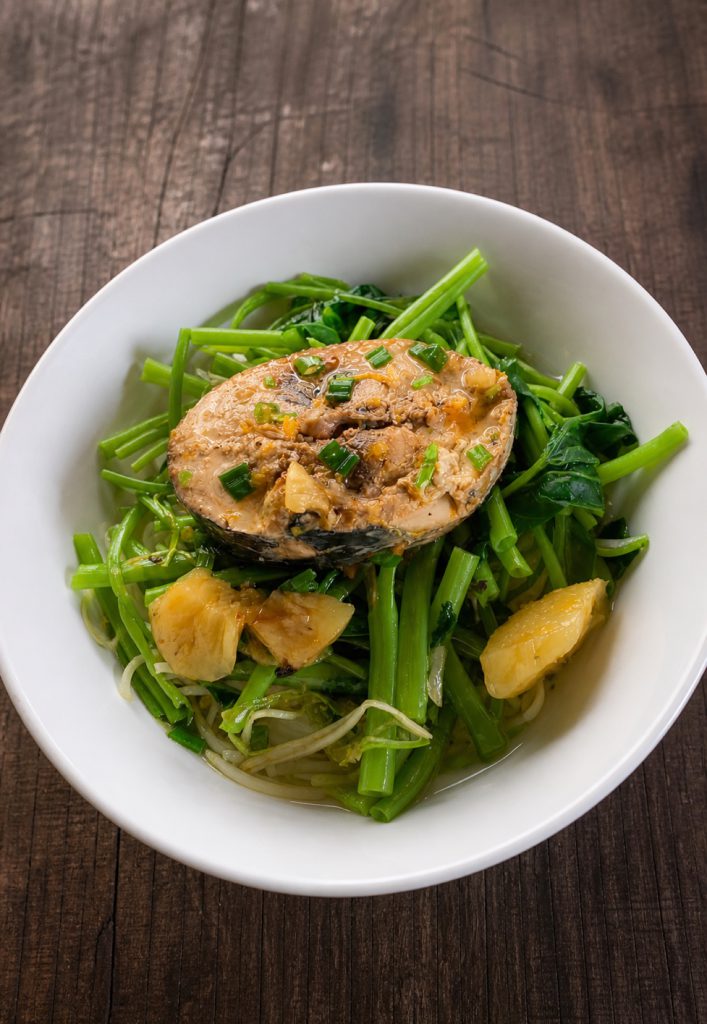
Alongside the market-led mâm cơm, Bâng Khuâng’s à la carte menu brings together dishes from different parts of Vietnam. The kitchen serves red noodles from Ban Mê Thuột, tuna noodle soup, bún nước tương and the menu’s 1967 beef fried rice. The photographs show the meal as it reaches the table, down to the herbs and sauces served alongside.



The room on the page
The food menu repeats the pattern of the dining room tiles behind the dish photographs. The red noodle page shows how a detail of the building becomes part of the printed identity guests handle at lunch.
Building to last
The work after opening
The next cup, the next lunch and the next workshop all have to live up to the idea.
Over more than two years, the founders moved from opening a bar to giving the work ways to continue: written recipes for service, a range with its own packaging, seasonal gifts that could be fulfilled and a second location with a different routine.
Each step brought a new constraint. At Tuhu it was the shape of a vessel in the hand. In the gift sets it was the work of getting the product from design to delivery. At Bâng Khuâng it was what the kitchen could serve at lunch. Each constraint gave the studio a design problem it could work on and a result a guest could experience.
That is the practice MIDORI Studio built at its own expense: shaping an idea, making it in real materials, putting it into service and doing the work of keeping it there.
Project
MIDORI Matcha & Coffee
Midori Studio, Saigon
Scope
Brand identity, packaging, product, hospitality and cultural programming
More from MIDORI